

Grow What Grows Well
- a June vegetable garden tour

One of the pieces of advice most commonly given to people who want to grow some of their own food (other than “Just start!”) is “Grow what you eat”. While this is good advice - if you’re going to spend a lot of time and effort sweating away in your garden then obviously it is a good idea to use that time and effort to grow something you are actually going to enjoy eating – I personally prefer the advice “Grow what grows well”. Luckily there are so many edible plants out there that you shouldn’t have any problem at all finding things that do well AND that you love eating!
It’s been a while since I’ve done any sort of garden update, so shall we go for a wander around the vegetable patch and see how much I’m following my own advice (or not)?
After a mini heatwave at the end of May (although thankfully with temperatures nowhere near as high as further south) June began with clouds, drizzle, and midges. The warmth and dampness has given everything in the garden a bit of a boost – including the weeds, which are growing at a ridiculous rate!
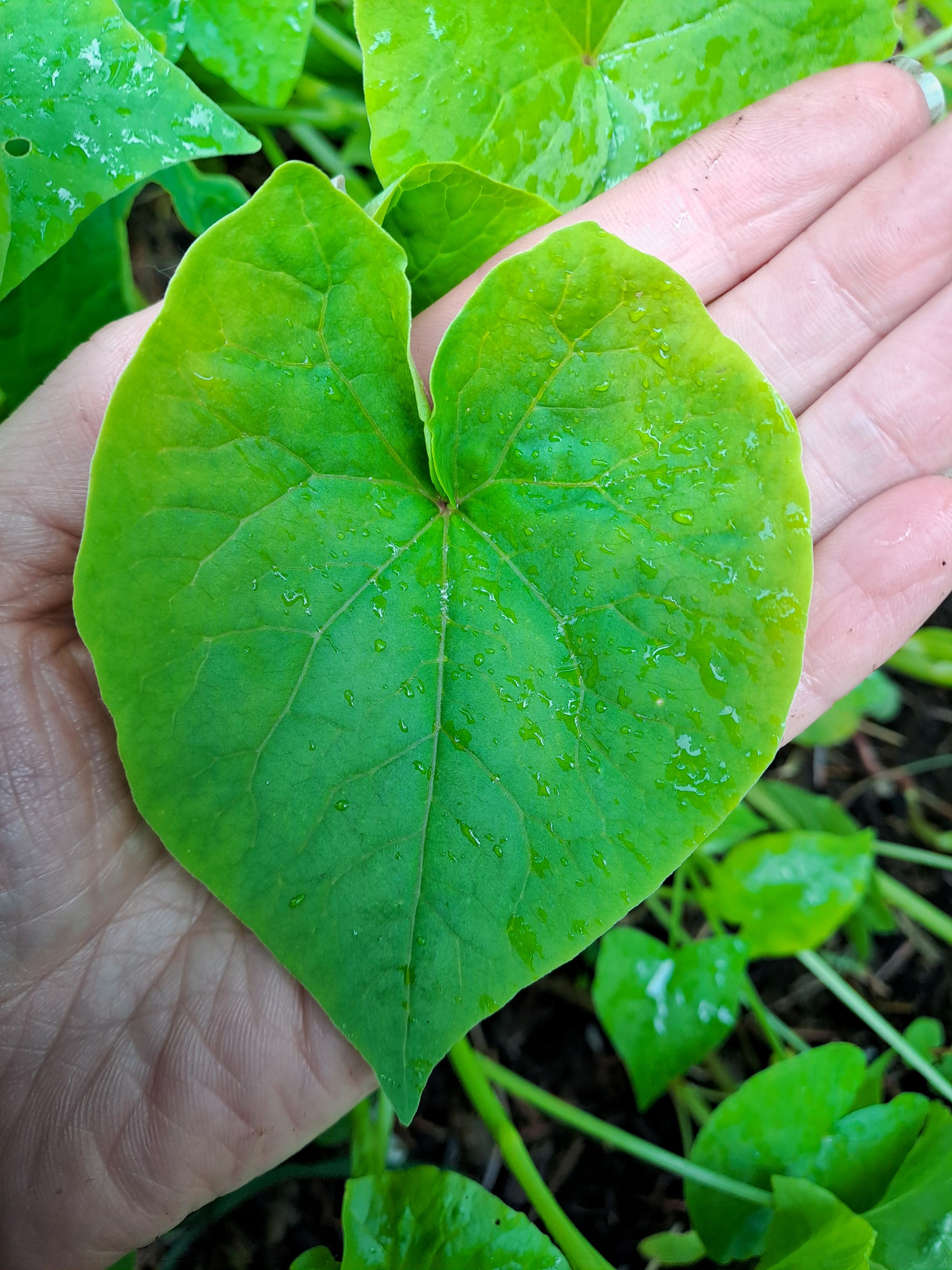
First up we have a bed of Tartary Buckwheat (Fagopyrum tataricum) , a new crop for this year. This probably isn’t something I would have ever chosen to grow, but some seeds arrived as part of the Annual Oyster Swap, so I decided to give it a go. The seeds are commonly roasted to make buckwheat tea and can also be used like popping corn – this is the main reason I said yes when I was offered it! I’m looking forward to it being ready to harvest so I can try it out.
Finding out what grows well in your particular area doesn’t have to involve years of trial and error: the people I do this annual swap with also live on the west coast of Scotland in similar conditions to me, so if something works for them, then there’s a good chance it will work for me too. From my personal experience gardeners are usually helpful and generous, and willing to share not only advice but also spare seeds and seedlings. This can seriously cut down on your number of unsuccessful harvests.
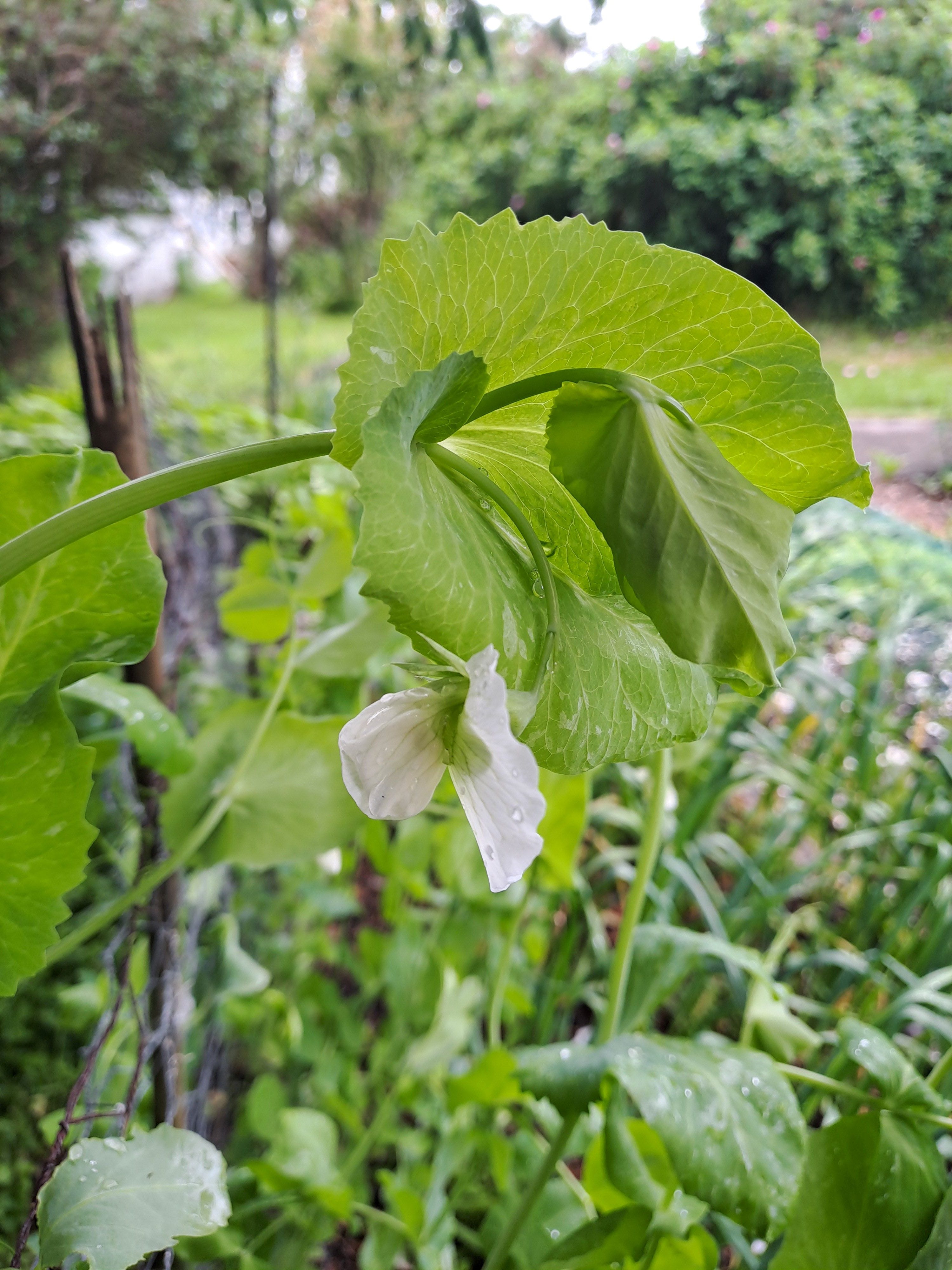
Growing up the wire mesh behind the Tartary Buckwheat are peas: a variety called “Robinson”. I bought the seeds last year from Seeds of Scotland, my current go-to place for seeds. They’re a relatively new, small company based on the Black Isle, so I know the seeds will be well-suited to my climate, unlike many of the big companies that produce their seed on the continent. The peas produced prolifically last year so I saved lots to grow this year. They’re flowering away, so it shouldn’t be too long before I get to harvest my first peas.
Next to them is garlic, sowed last autumn. I usually plant about 100 cloves, which is a bit too many as I still have a few dozen of last year’s ones to use up. I could probably reduce this down to 80 cloves in the future, which will still give plenty for eating, along with enough to replant in the autumn. I can’t actually remember when I last bought garlic for either eating or growing; it’s certainly been several years. The garlic should be ready to dig up in just a few weeks, then I’ll add some compost to the soil and plant out my pumpkins into that bed. They are also grown from seed from Seeds of Scotland, and are currently in pots in the polytunnel.
Next up we have a bed containing some root vegetables sown in blocks: beetroot (“Jannis”), parsnips (“Everton”), and carrots (“Autumn King”). To mark where one crop ends and the next begins, I transplanted some lettuce and calendula seedlings between the blocks.
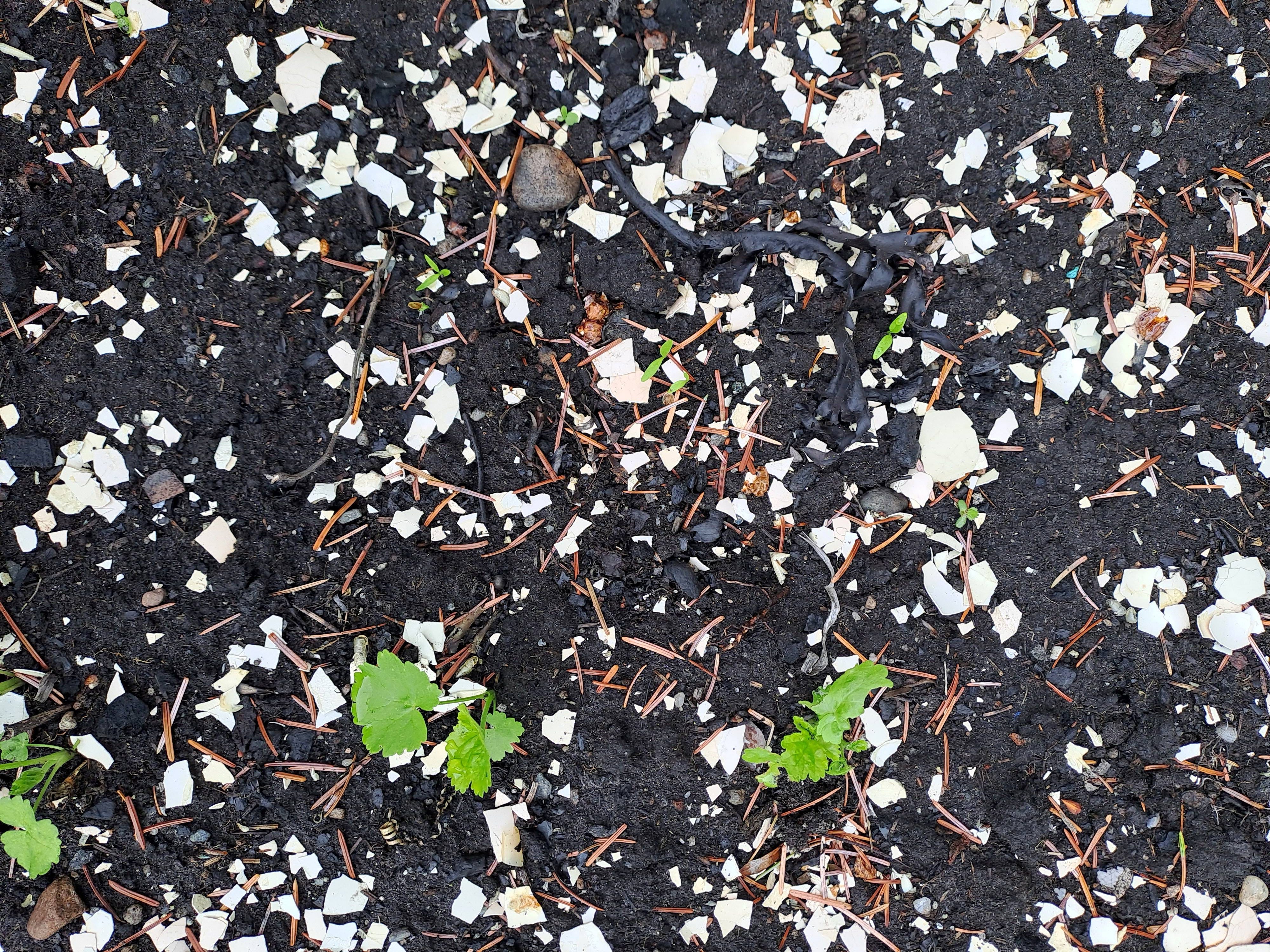
I had very poor germination from the parsnips that I sowed back at the start of April, probably because the soil was still a bit too cold for them. It took a while for the weather to warm up this year, and the wetness of April probably didn’t help either. I sowed some more on the 17th of May which are now starting to germinate. I’m not too concerned about being a bit late with them; parsnips can survive in the ground all winter so there’s no rush to get them grown and lifted before temperatures fall again.
In the next bed we have some chard (“Peppermint”), cauliflower, cabbage, and some volunteer potatoes, interspersed with self-seeded Calendula and Forget-Me-Not. I like having flowers in among my vegetables: not only do they look pretty, but they can attract beneficial pollinators, and distract pests away from crops (see last week’s post on Garden Pest Control for more on this). There are a few dandelions growing in here too. I’ll dig them up in autumn or winter and make some more dandelion root coffee.
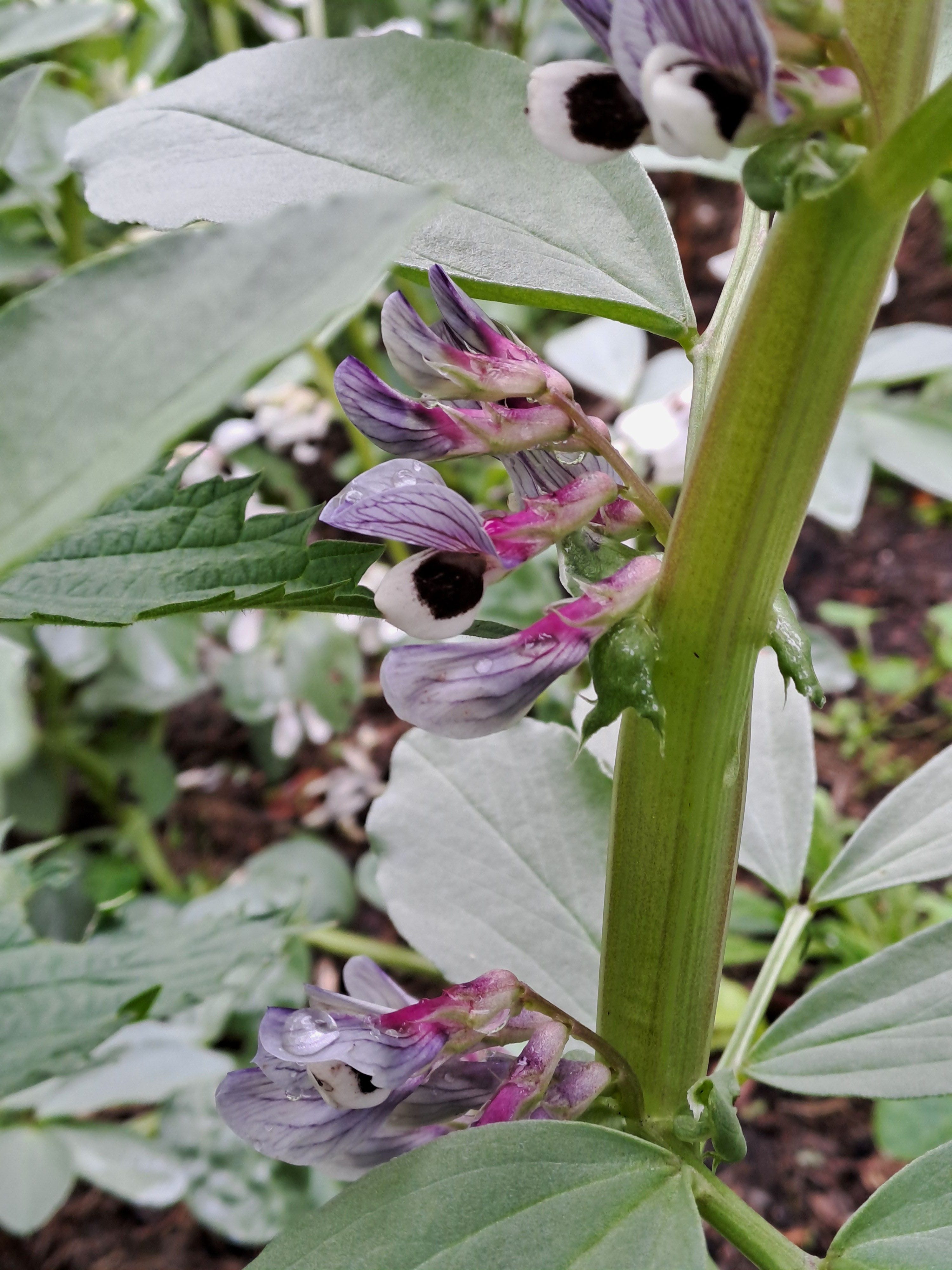
At the back of this bed are two patches of broad beans, and both of them are a complete mixture of different varieties. I know that some of them are a pink variety called “Karmazyn”, and a variety called “The Sutton” that I have been growing and saving seed from for several years. The rest were part of the Annual Oyster Swap earlier this year and arrived in an envelope labelled “Broad Bean Mix” so it will be interesting to see what they all look like. Broad beans definitely fit into the “Grow What Grows Well” category and are starting to flower nicely, although they could do with a bit more support during these heavy rain showers we’ve been having lately.
I’ll stay on the subject of beans for a moment. At the other end of the vegetable patch I have a few wigwams with Runner beans growing up them: some Scarlet runner beans, and some from another mysterious envelope labelled “Runner Bean Mix”. I love runner beans as the whole pods can be cooked and eaten when young and tender, or the beans can be allowed to develop and then used like dried beans. Beans are a great source of protein so if I was growing an “Apocalypse Garden” and had to actually feed my family properly from the garden rather than just using it to supplement our diet, I would grow A LOT more beans. There are so many different types out there that I’m sure there must be ones to suit all climates and growing conditions.
Next we arrive at Russian Kale Forest. I let one of my plants in this bed flower and go to seed last year, and it self-seeded everywhere! They obviously like growing there so I’ve just left them to it, although I did move a handful of seedlings up to the back of the vegetable patch. Hopefully they will grow and self-seed there, so I’ll be able to use this bed for something else next year. In the photo you can see sorrel and Calendula growing in amongst it.
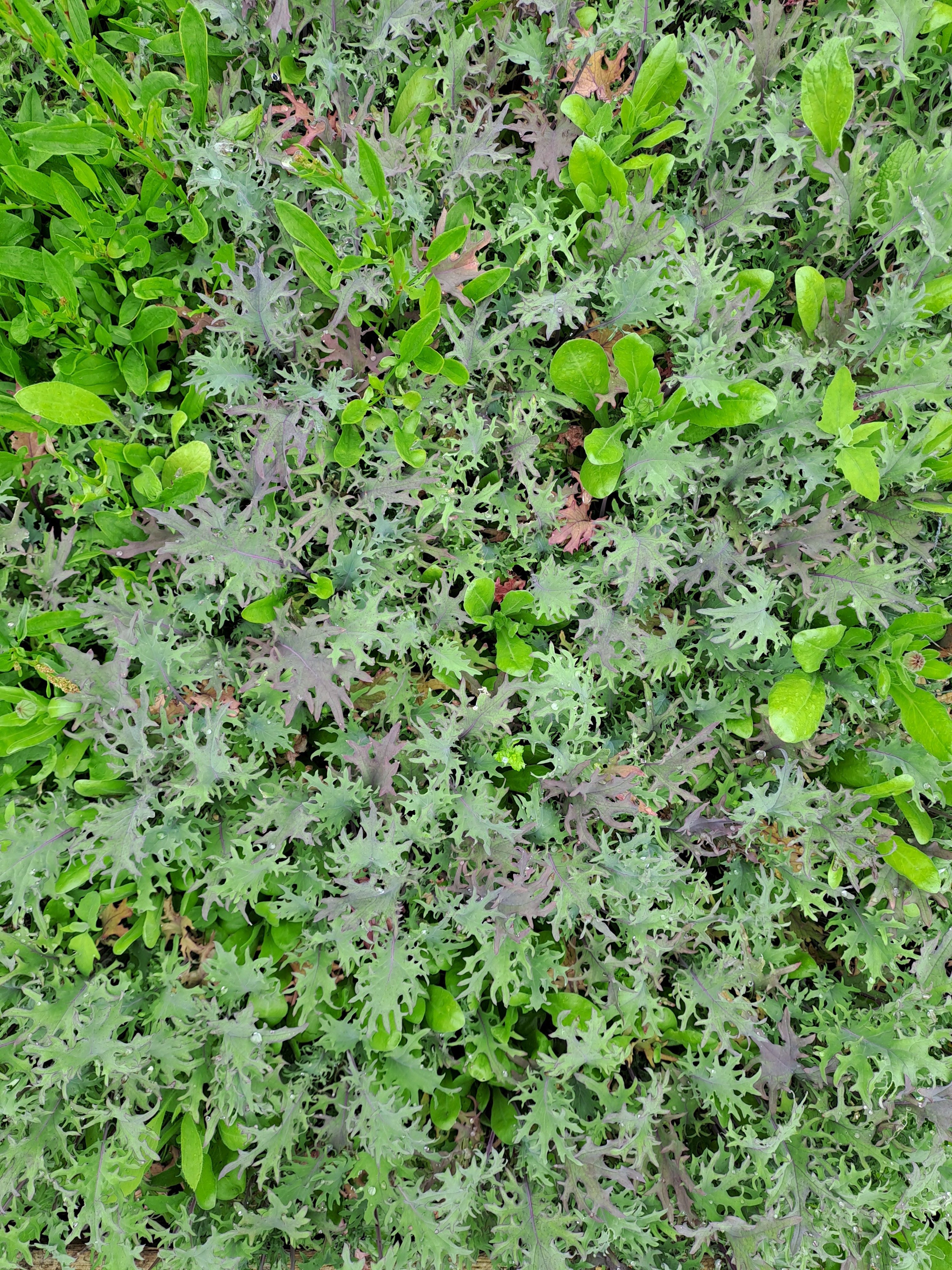
In the past I’ve grown “Cavolo Nero” kale, but it never did that well in my garden, and never self-seeded. We’ve now all decided we actually prefer the taste of this Russian Kale instead. (Grow what grows well! It seems I’m maybe not too bad at following my own advice after all.) For year-round greens I grow two varieties of perennial kale as well: “Daubentons” and “Taunton Dean”.
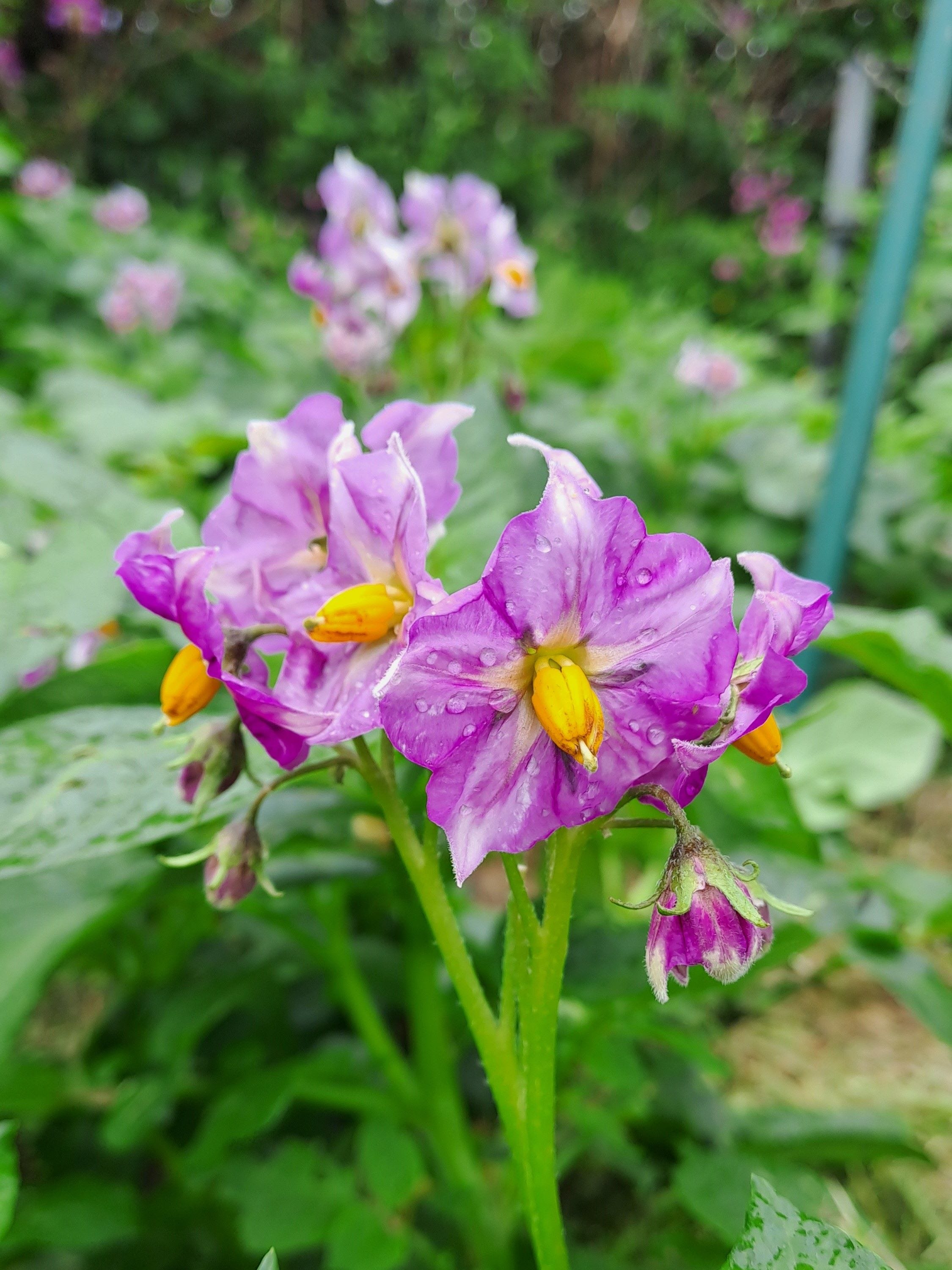
Now, the potato bed. No matter how hard I try I never manage to dig up all my potatoes, so come March I have volunteers sprouting everywhere. Last year I seemed to somehow miss digging up several plants, rather than just the odd potato here and there. I dug up 60 of them from beds that I had ear-marked for other things, and planted a few rows of them together in one bed. They’re coming along nicely, and a few of the plants have very pretty purple flowers. I really do think vegetable flowers are completely under-rated.
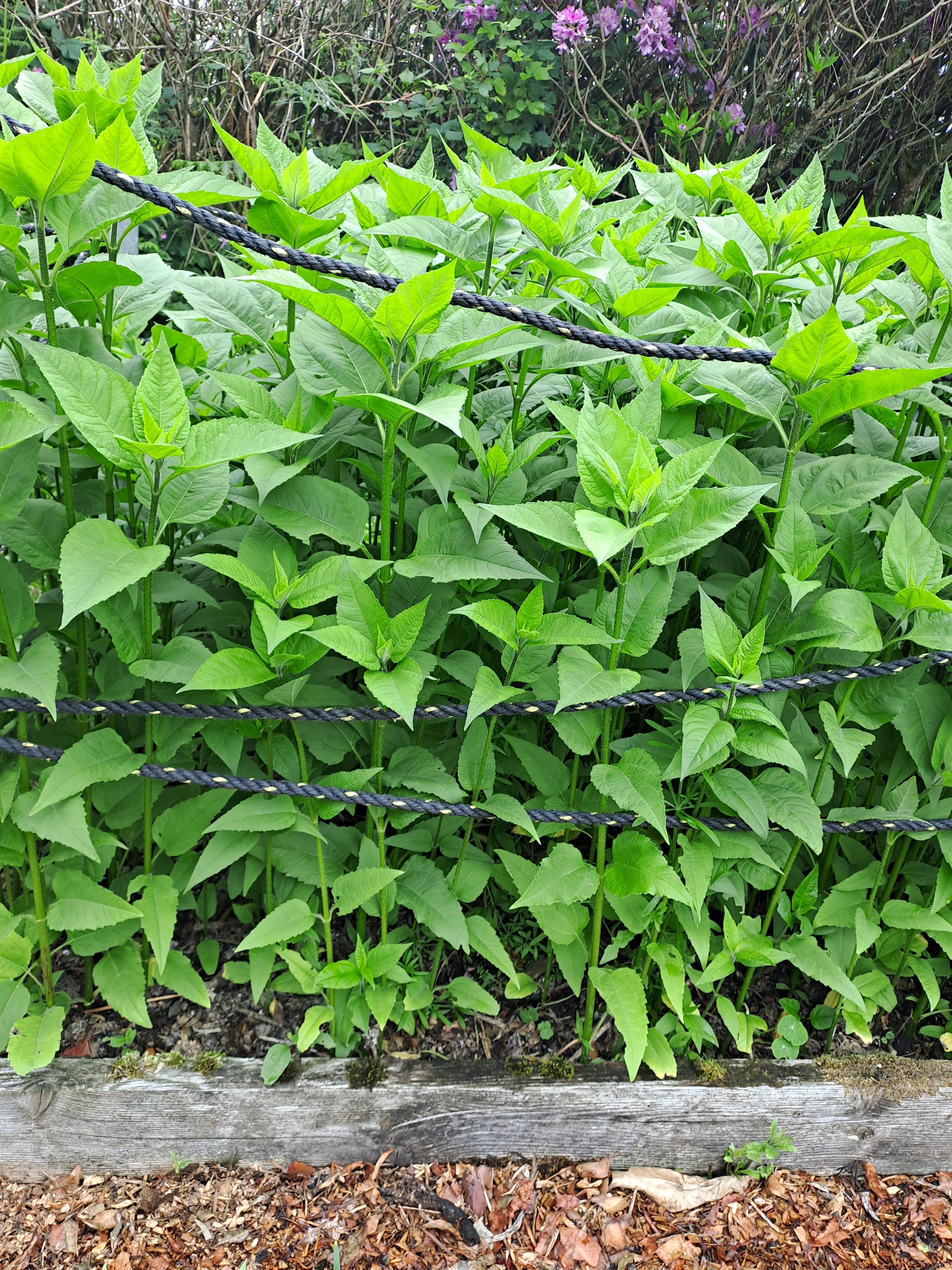
In last week’s article about natural pest control you may remember I wrote about removing the wooden edging from around my vegetable beds as they were providing the perfect damp, weedy habitat for slugs and snails to live in. I made an exception for the sunchoke/Jerusalem artichoke bed, however, as I wanted to try and keep them contained. They’ve been loving the weather lately and have grown at least a foot in the last week. They have a habit of flopping over when they get too tall, so I got the rope to hold them in place attached to the posts just in time.
This year, I tried growing onion from seed – a variety called “Ailsa Craig” - rather than sets for the first time. I know it’s still early and there is still plenty time, but I can’t help feeling they’re not growing very well and should be bigger. We’ll see! I did also buy a bag of onion sets from a local garden centre just in case they don’t work out. They’re doing fine, so I should end up with onions one way or another.
Shall we have a quick look in the polytunnel? This is where growing what grows well goes slightly askew.
One side of the polytunnel is almost entirely taken up with tomatoes. I think of them as being a “borderline” crop here. They wouldn’t produce outside, and can be a bit hit-or-miss even under cover, depending on how good (or not) the summer weather is. I have 25 plants growing this year, and over the years I’ve grown several different varieties. I save my own seed from them and I think there has been a certain amount of cross-pollination going on, as they don’t always end up how I remembered them from the year before (or maybe I’m just bad at labelling my envelopes?!). My main aim is to have tomatoes that are well-adapted to my location’s growing conditions, rather than being too fussed about trying to keep particular varieties going. (On a side note, Japanese Rose (Rosa rugosa) grows very well around here, and I experimented somewhat successfully last year at using its hips to make an alternative “no-mato” sauce to use on pizza.)
At the other side of the polytunnel we have more beans: Borlotti at one end and Majorcan Pea Beans at the other. The Borlottis have grown a lot recently, although they are refusing to climb up their own strings and keep jumping to neighbouring ones. Ah well, it’s all going to be a chaotic tangled mess by August anyway so I’ll just let them get on with it... The Majorcan Pea Beans are a bit behind but will hopefully catch up soon enough.
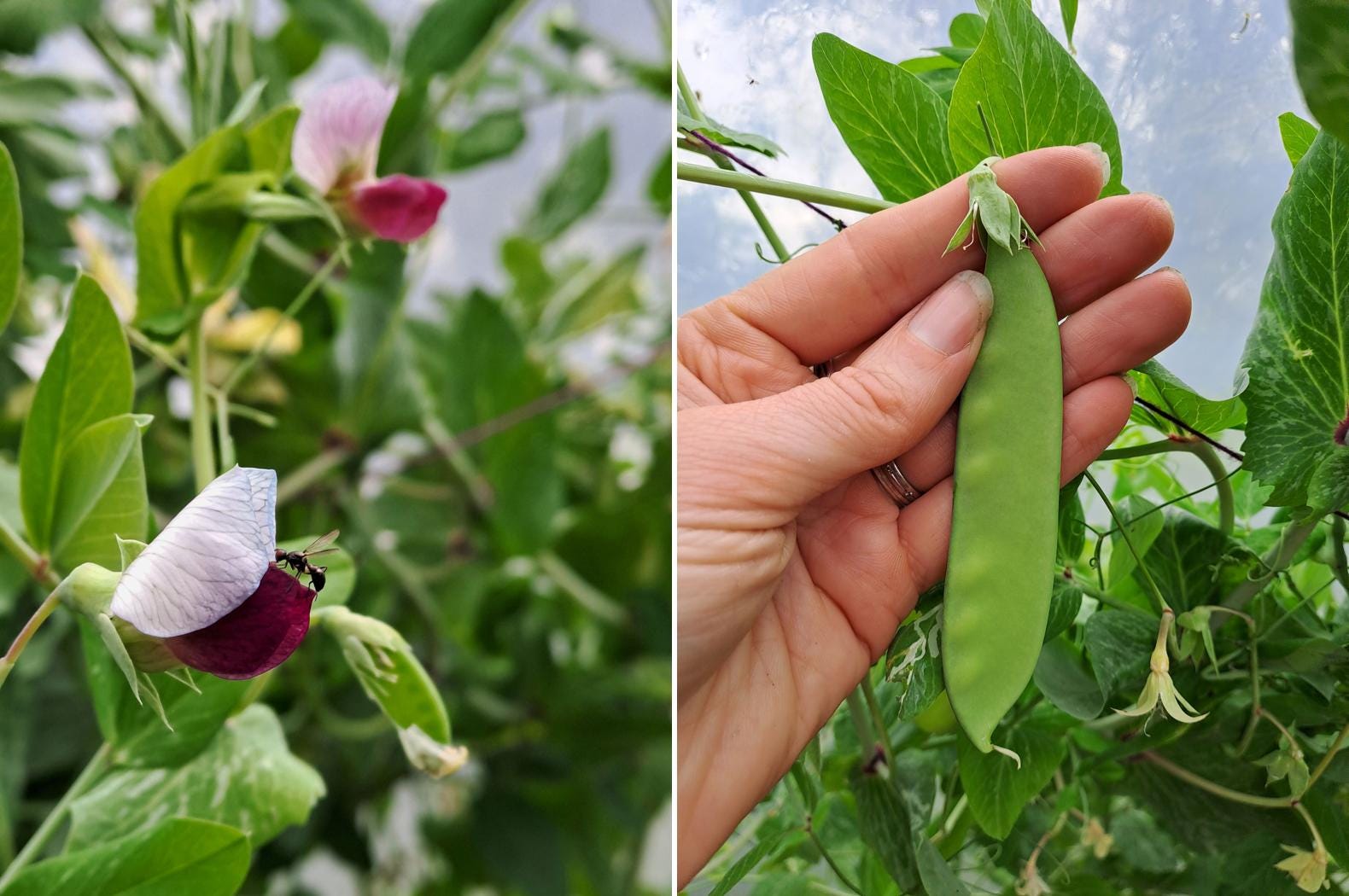
I have five courgette plants growing in the polytunnel, and while they would be alright outside, they do much better with a bit of protection and additional warmth. Also in here are some lettuce and spinach beet plants for earlier harvest, basil, coriander, chillies, and some mange tout. It is an early variety called “Frieda Welten” – also part of this year’s oyster swap – that I planted in February. We have been eating them for the last month or so and, unlike other mange tout that I’ve grown in the past, these ones don’t appear to get bitter or stringy when the pods get big. Definitely one to add on to both the “grows well” and “tastes good” lists!
This has somehow turned into quite a long-winded wander around my vegetable patch, so I think I’ll stop here. Thanks for reading, and I’d love to know what you’ve got growing in your garden at the moment.
Cat x
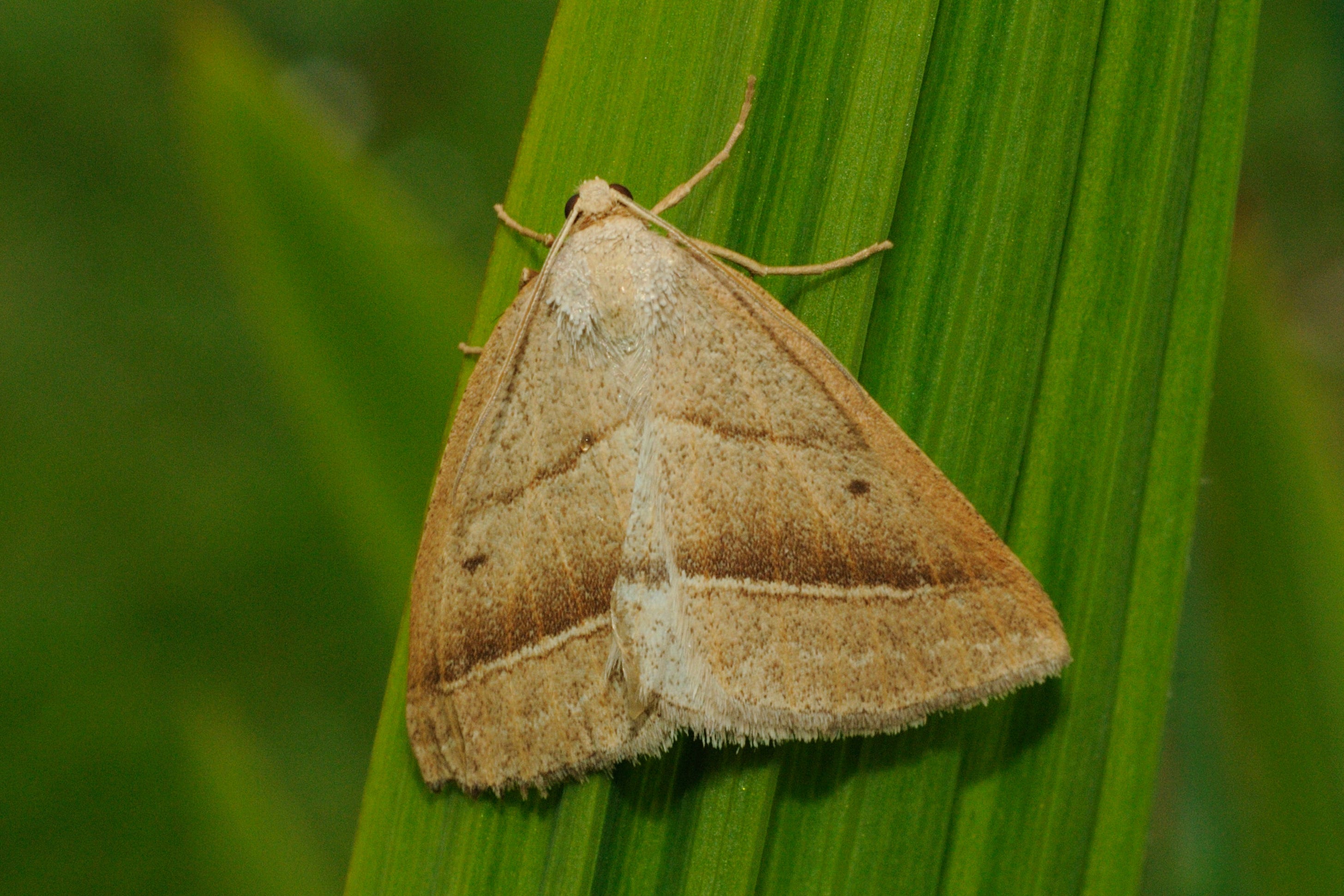
Moth of the Week: Brown Silver-line (Petrophora chlorosata)
During late spring and early summer, this geometrid can easily be the most common moth in my trap: sometimes I can have over fifty of them! The caterpillars feed on bracken, which can be found in abundance round here. The adult moths are easily disturbed from bracken during the day: sometimes I can be surrounded by clouds of them as I tramp about through the undergrowth.
Posts here are always going to be available to read for free. However, if you like what I write and want to contribute financially without committing to a paid subscription, I’ve added a ko-fi button below if you would like to show your appreciation. Thank you to everyone who has already contributed! xx
Amazing post, Cat! It's always an adventure to find out what grows where you live, and what doesn't... We've experimented a lot over the years with our soil, and it still holds surprises. We love gardening, and will expand our garden exponentially in the near future!
I really enjoyed reading your meander around the kitchen garden. It's nice to hear about realistic gardening experiences rather than the 'perfect' or 'failing' distinction that a lot of garden writing falls into, especially on Instagram. Everything here seems a bit small and behind due to the cool May weather but hopefully it'll catch up!