
Mending Matters
Loved Clothes Last

Earlier this week I passed my first Substack-versary: it has now been just over a year since I started posting my writing on here. To mark the occasion I felt I should write some sort of insightful, reflective post about what I’ve learned and how I’ve grown as a writer, but I’m afraid the words just weren’t coming! One thing I have learned, however, is that I’m not good at sticking to a theme and fitting easily into one of Substack’s categories (or maybe just fitting in in general?!). On that note, following on from last week’s piece about limpets and eels, may I present to you today’s post all about the completely unrelated subject of mending, and why it matters.
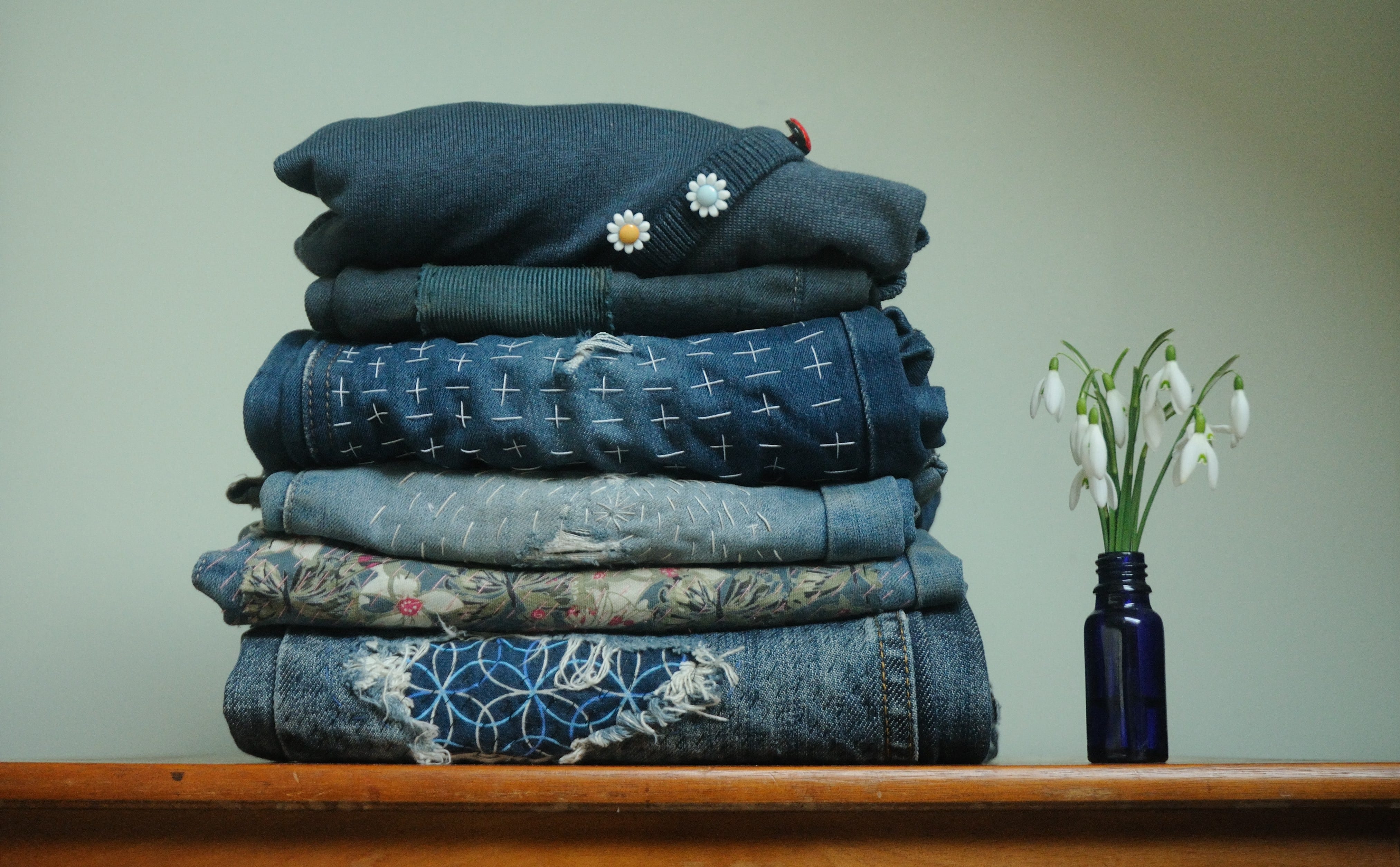
Some of the statistics relating to clothing and overconsumption are quite shocking: Apparently there are currently enough clothes on the planet to clothe the next six generations. Thanks to the rise of fast - and more recently ultra-fast - fashion we are buying more clothing than in the past (60% more than 15 years ago), but keeping it for half as long. In fact, one UK study found that clothing is only worn an average of 7 times before it’s discarded, and in the UK alone, an estimated 350,000 tonnes of clothing is dumped annually.
Worldwide, 100 billion pieces of clothing are produced per year, and 60% of these are made from plastic (such as polyester or acrylic). These items shed microfibres every time they are washed, contributing to the global microplastics problem. Microplastics have been found in the food we eat, the water we drink, in human brains and testicles... Some clothing has also been found to contain toxic chemicals, several times higher than the safe limits.
We have too many clothes, and they may even be poisoning us! And that’s before we even take into consideration the dangerous conditions many garment workers have to endure...
The average person wears 20% of their wardrobe 80% of the time. I am definitely guilty of wearing some items more than others: I rotate through a couple of pairs of jeans, a favourite dress and skirt, a few hand-knitted jumpers, and a handful of long-sleeved tshirts (I’ll move back to the short-sleeved end of the drawer round about Easter!). These items all get a lot of wear, and I want them to last a lot longer than that reported figure of 7 wears. Because of where I live, popping to a shop to buy a couple of new items isn’t really an option, and I’m not a fan of online clothes shopping (I want to try something on before I buy it).
And this is where mending comes in: to prolong the life of my clothes. Other than sewing on the occasional escaped button, it is something I only really got into after my son was born. He would (and still does!) wear holes through the knees of his trousers at a ridiculous rate, so learning how to patch them became something of a necessity. Basic repairs like this are actually really straightforward, but I never particularly enjoyed it until I stumbled across “visible mending”, which changed my whole opinion of it – I didn’t need to make my mends perfect and invisible; I could make them into a feature!1 This gave me so much more freedom to be creative, and it seems animal-themed mends have become my specialty.
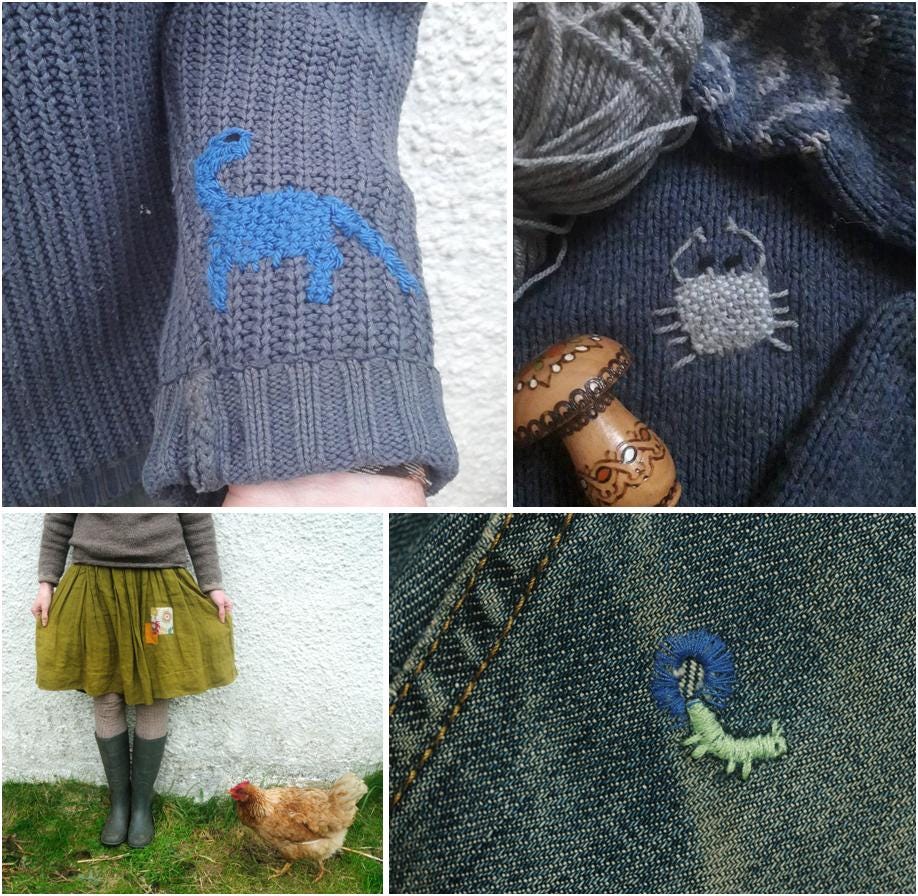
In fact, mending changed my whole attitude towards clothing. Before buying any item – new or second-hand - as well as asking myself if I actually need it, I now also ask “Do I like it enough to spend time mending it in the future? Is it good enough quality to be worth mending?” I only buy things if the answer to these questions is “Yes”. This has resulted in me buying far fewer clothes, but buying better quality items. I think this is a really important mind-shift. Clothing shouldn’t be treated as throwaway; we should value it, look after it, treat it with respect.
It’s pretty clear we can’t continue with our current levels of overconsumption: the photos of mountains of discarded fast fashion in the Global South are horrifying. In a world full of advertisements constantly telling us we need more more more, mending is an act of rebellion. It is a way of saying, “Actually, I don’t need more. What I have already is good enough.”
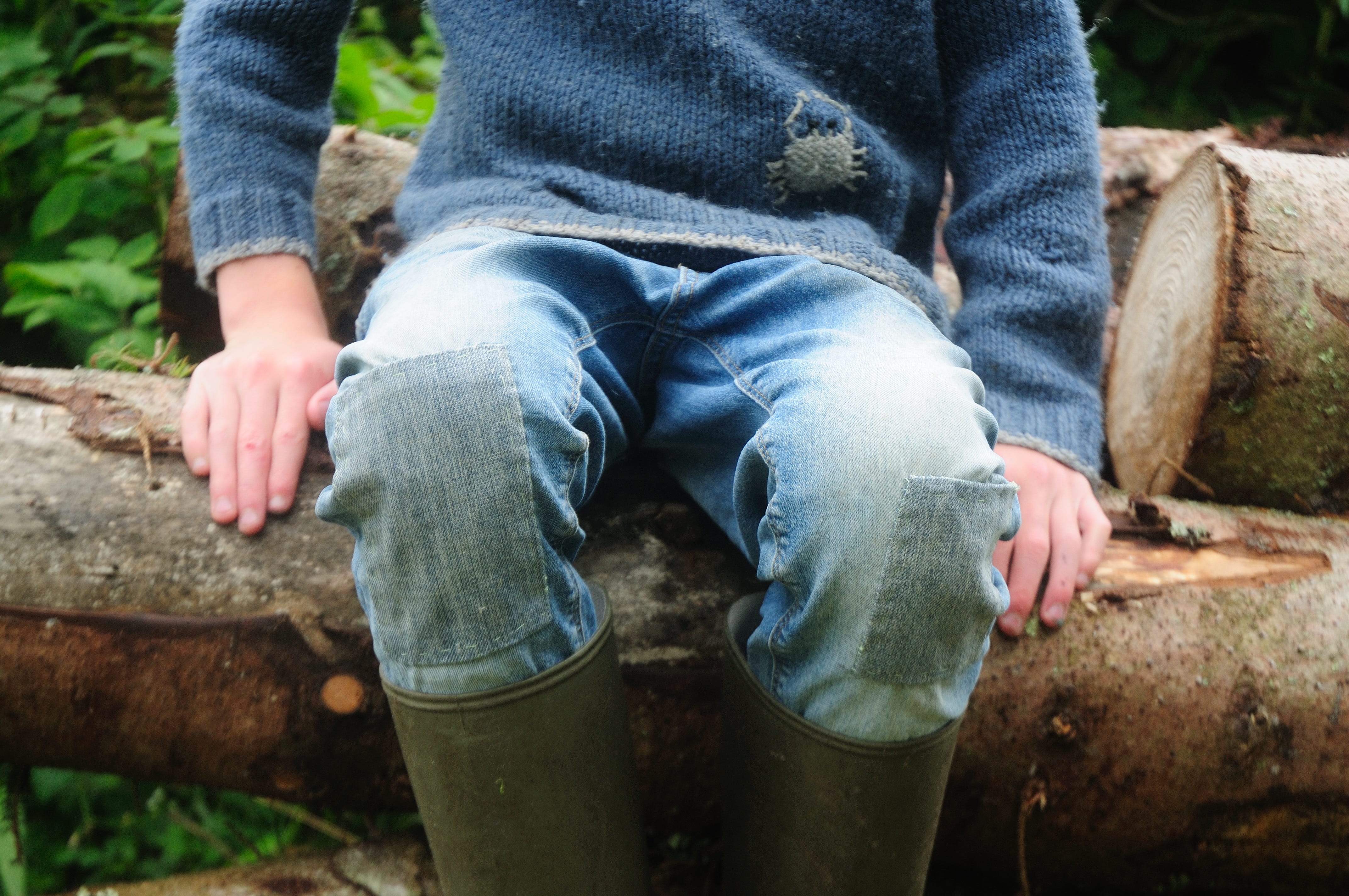
I know I’m not going to save the world single-handedly by darning my socks and patching my jeans, but it’s a step in the right direction – a step towards the sort of world I want to live in.
If you’re going to do serious amounts of darning I have a handy hint for you: I highly recommend getting hold of a Speedweve, or darning loom (pictured below). This is an inexpensive tool, available in many places online, which really does make darning holes so much quicker and easier.
Thank you for reading, and happy mending!


Moth of the Week
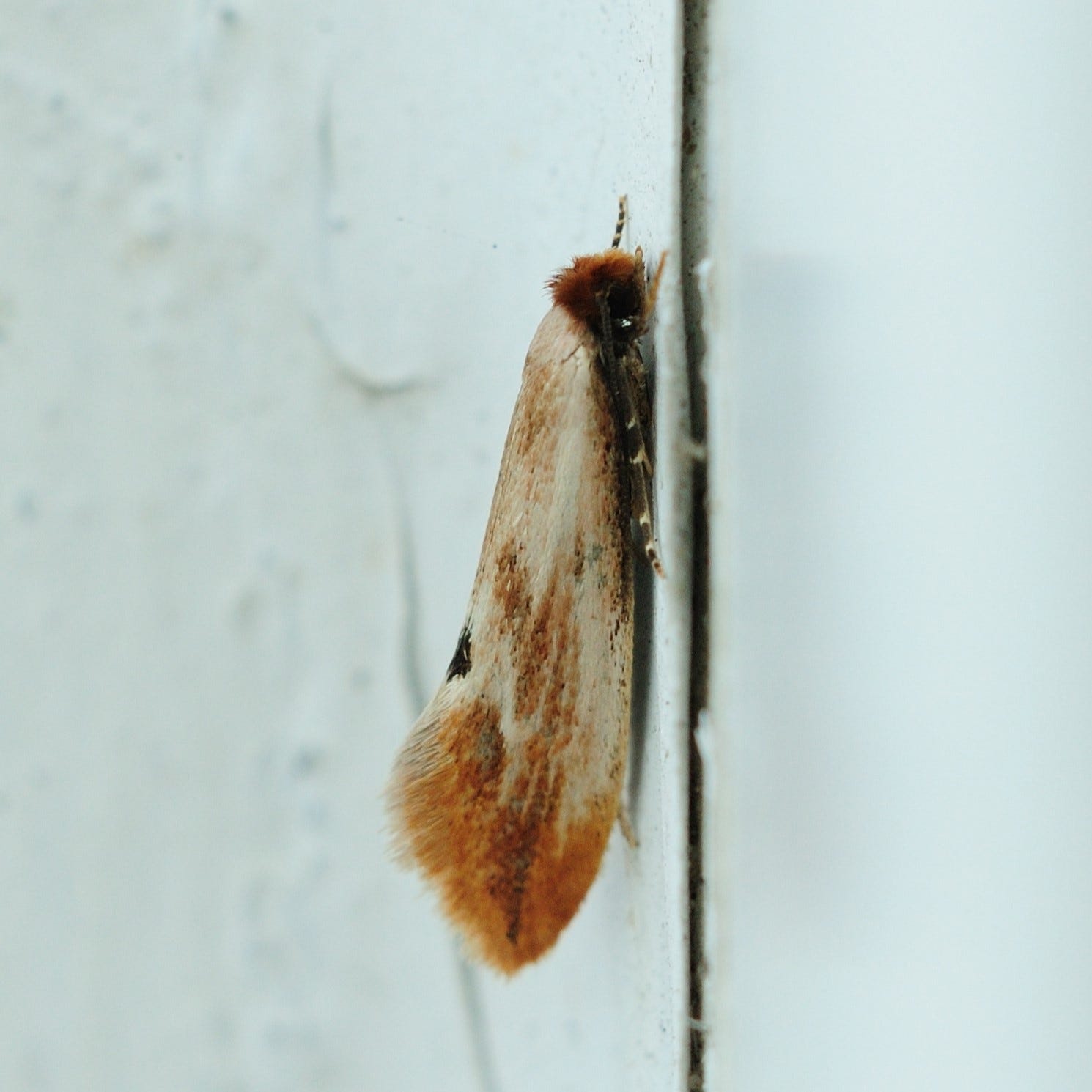
I’ve decided to start a new feature in these newsletters called “Moth of the Week”, where I will share a photo and a little bit of information about a particular species. I will try to choose a species that will be around at this time of year, but because this week’s post was all about mending I have decided to start with the micro-moth Tinea semifulvella, which belongs to the same family as the dreaded clothes moths. Of the 63 species in this family, only a small handful actually causes any damage to our clothes, and it is the larvae, not the adult moths. Not that that makes them any less annoying...!
Clothes moths evolved in the wild to feed on fur, hair, wool and feathers. We’ve created a perfect habitat for them in our homes and wardrobes, so I guess we can’t really blame them for taking advantage of the situation! Tinea semifulvella is not one of the clothes-munchers, instead being found in woodland, hedgerows, gardens and grassland, rather than in houses. The larvae feed on feathers in birds’ nests. I think it’s a rather pretty little thing.
Posts here are always going to be free, but if you like what I write and/or find it useful, I’ve added a ko-fi button below if you want to show your appreciation. Thank you to everyone who has already contributed! xx
Aaahhh! Mending DOES matter! It's the future. I am an avud mender of socks, and I had the pleasure of interviewing Katrina many moons ago, such an inspiring woman. I am also finding that the things I probably should be writing, I.e. relevant to my craft/s are wildly absent just now - is it because its winter still? But hey, its all relevant to *us* aye?!
I don’t think you are changing your themes. Mending and eels are related because your mind is open to what is happening around you. I wear my clothes forever—T-shirts with unraveling cuffs at home, festive clothing stored in a hamper. I considered becoming a fiber artist using hand stitching but switched to painting instead. Enough manual labor; I eschew mending my cuffs.