
The Spaghetti Harvest
- as good as 1957!

There is a famous BBC report from 1957, broadcast on the current affairs programme Panorama, which shows a family in southern Switzerland harvesting spaghetti from a “spaghetti tree”. The report talks about how there was a bumper crop that year after a mild winter and the “virtual eradication of the spaghetti weevil”, and includes a discussion on breeding a tree that would produce the perfect length of spaghetti.
Back in the 1950s, pasta was not an everyday food in Britain. Approximately 8 million people watched the programme when it aired on April 1st 1957, and hundreds of people phoned the BBC the next day asking for more information about growing their own spaghetti tree. Apparently they were told to “place a sprig of spaghetti in a tin of tomato sauce and hope for the best”.1
Obviously this was an April Fool’s Day joke, but did you know that you CAN go out and harvest your own spaghetti?! I did just this a couple of weeks ago with a friend. Now before you all start to think I’m completely mad, let me explain. The type of spaghetti we went foraging for wasn’t made from pasta; it was a type of seaweed.
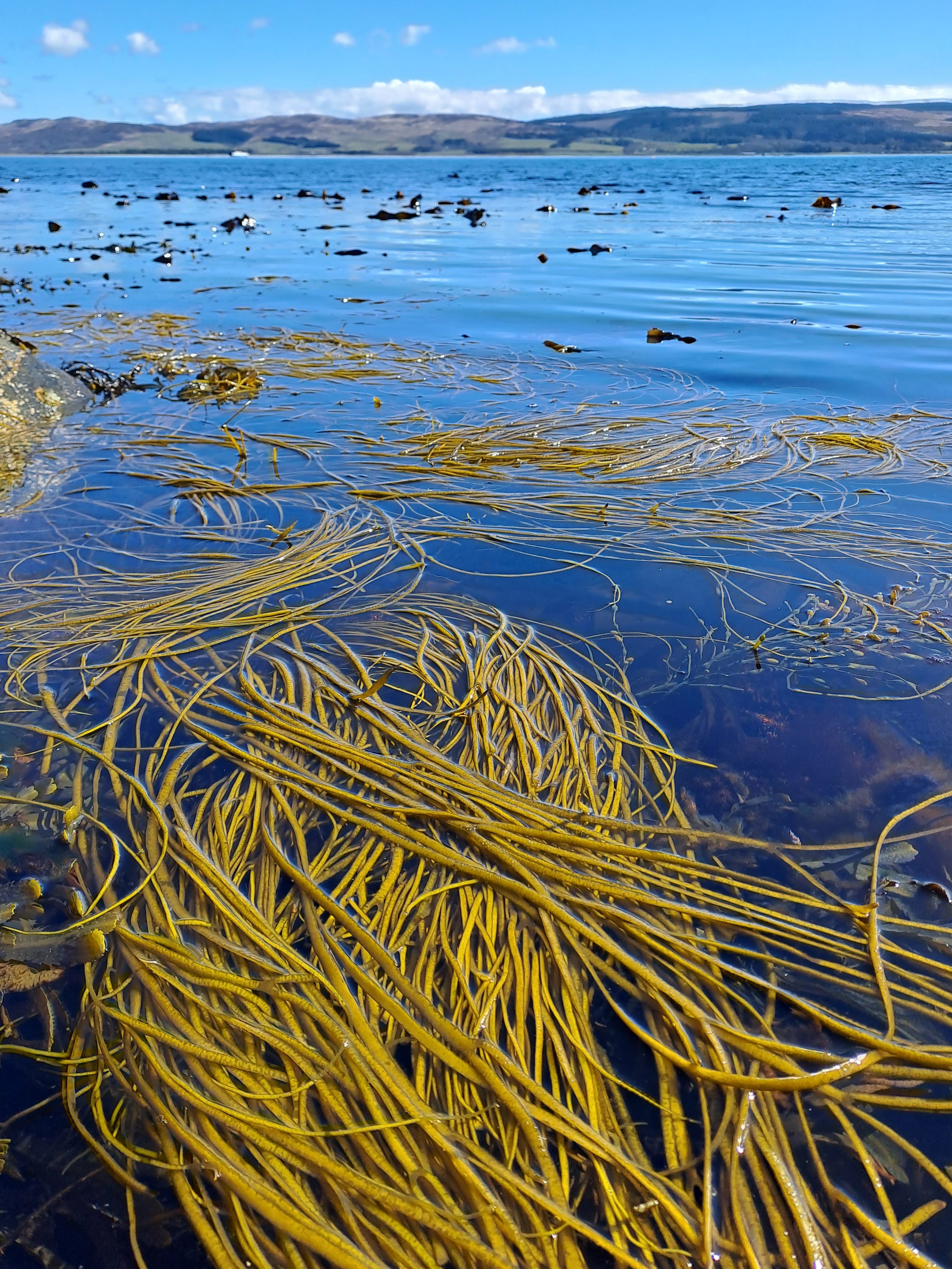
Seaweeds are an essential part of marine ecosystems. They provide food and shelter for aquatic life, produce oxygen, sequester carbon from the atmosphere, filter harmful pollutants, improve water quality, and can reduce storm damage along coasts. Some of them are also suitable for human consumption.
Over 12,000 species of seaweed have been described globally, and they are divided into three groups. Green seaweeds (Chlorophyceae) are generally found in shallower water closer to the top of the shore, and include species such as Sea Lettuce. The red seaweeds (Rhodophyceae) can actually be a range of colours, including bright pink, dark brown, olive green or pale grey-white, but as the name suggests, are most commonly a deep red. The brown seaweeds (Phaeophyceae) include large species such as fucoids and kelps, some of which can grow to several metres long.
There are over 600 species of seaweed found in the seas around Britain. The good news is that none of the ones you can reach easily on foot around our shores are toxic, but just because something isn’t going to kill you, doesn’t necessarily mean you actually want to eat it! Some seaweeds are definitely more edible that others.
My “target species” for this recent foraging trip was Himanthalia elongata, usually known as Thongweed or Sea Spaghetti, which is a common brown seaweed found around the coast of Britain and Ireland, except for south-east England. It grows on rocks near the bottom of the intertidal zone on moderately exposed shores, in areas with strong tidal currents.
The seaweed has two different stages. The first of these is a button-shaped thallus measuring a couple of centimetres in diameter, which is attached to the rocks by a short stem, know as a stipe. This “button” can take up to two years to reach maturity. From it, two long strap-like reproductive fronds are formed in the autumn – the second stage. These grow quickly from February to May, and can reach a length of up to two metres. These long fronds are the “spaghetti” that we were looking for, although since the fronds are slightly flattened I suppose it would be more accurate to call it “sea linguini”...2
At low tide we squelched across the muddy sand to “Cow Island”, then picked our way over the rocks round the edge of the shore. Some of the rocks were still covered with the last of the Winter Laver (Porphyra linearis), which made them ankle-breakingly slippery. We made our way to “Spaghetti Junction” – I have my own names for all my favourite foraging spots! The original Spaghetti Junction can be found on the M6 motorway in Birmingham – it’s a completely mad bit of road engineering and really does look like a pile of spaghetti from above!
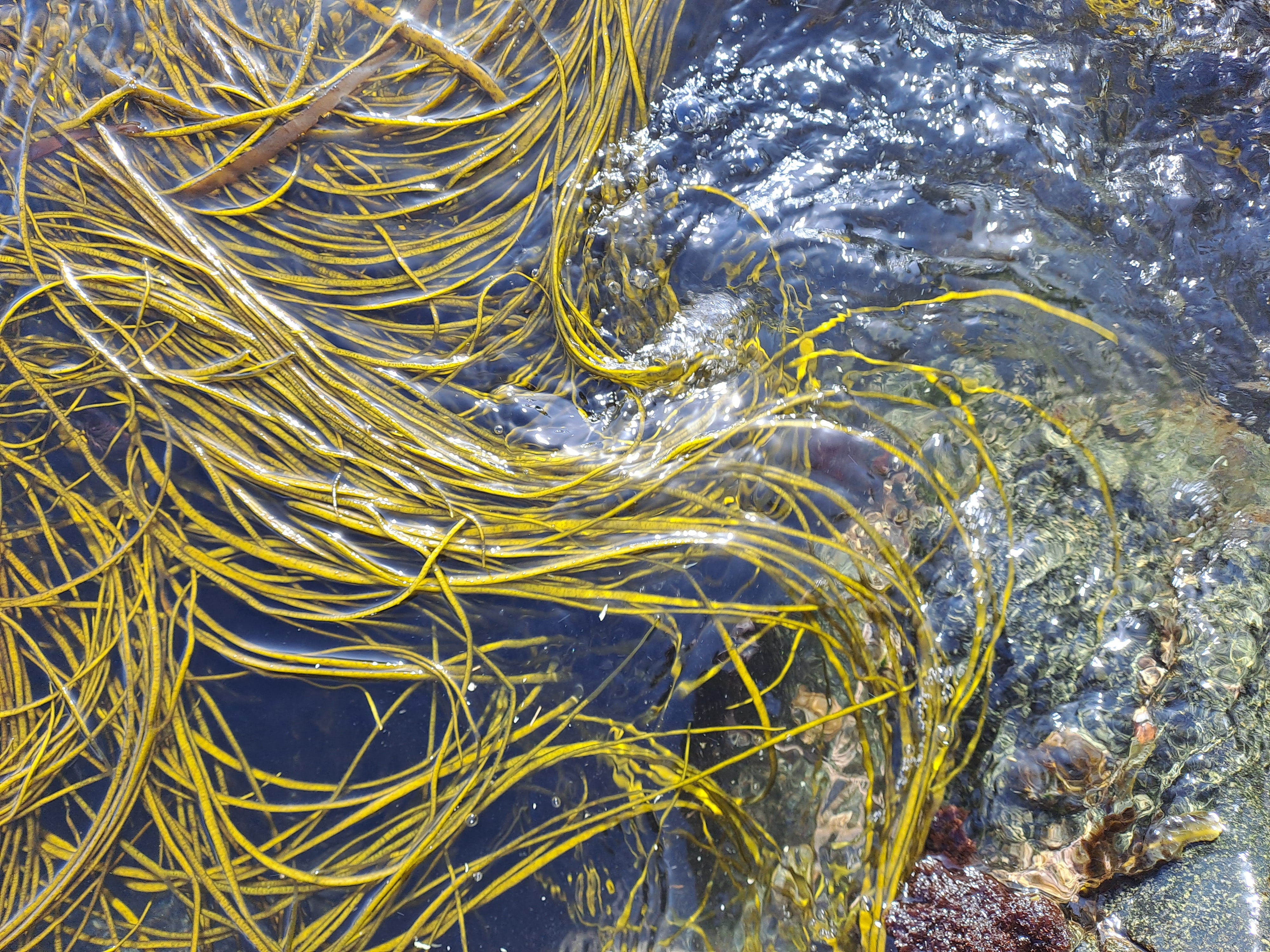
Despite the low tide, the Sea Spaghetti was only just within reach and I regretted not bringing the boat hook with me to pull it in closer. I managed to grab a couple of handfuls of it, narrowly avoiding falling head-first into the water, and cut off 30cm or so from the ends of the fronds. Harvesting the fronds in this way doesn’t kill the seaweed, and it will continue to grow.
I only harvest Sea Spaghetti when the fronds look a solid yellow-brown colour without too many spots on them. If they have a very speckled appearance, this is a sign that they are releasing gametes, which they usually do from June until winter. I find the texture just isn’t so good for eating then, as the fronds are starting to decay. Sea Spaghetti lives for 2-3 years, and reproduces once before dying.
We harvested a couple of handfuls, enough for a meal. I’ve tried to dry Sea Spaghetti unsuccessfully in the past, so I find it’s better to just gather a small amount as and when I want to eat it.
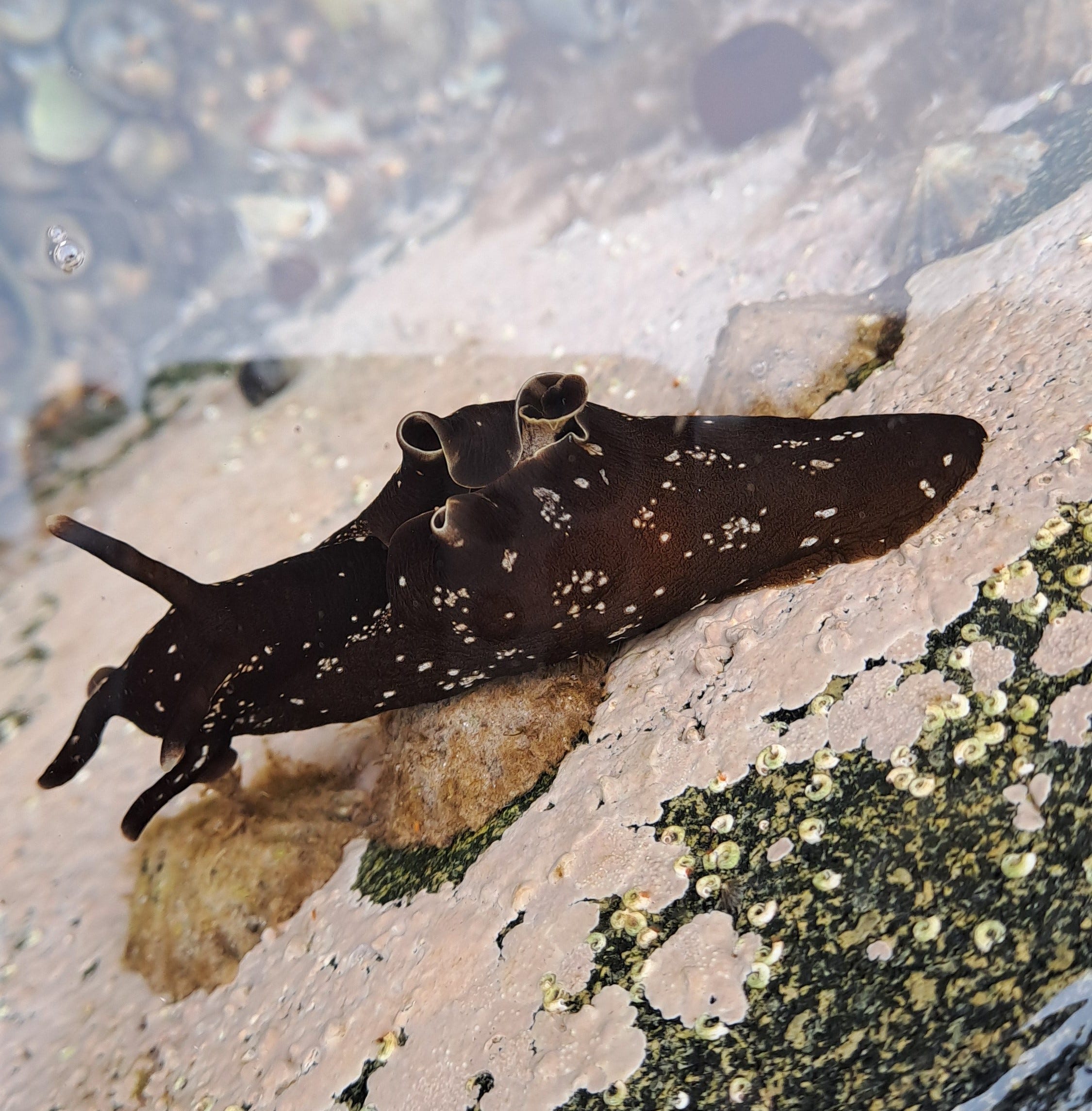
Mission complete, we headed back to the house, stopping to admire some Dotted Sea Hares in a rockpool on the way. Sea Hares (Aplysia punctata) are a species of sea slug found around most of the coast of Britain and Ireland. We often see large numbers of them in spring, when they come closer inshore to breed. The one in the picture below really was living up to both its common and scientific names, being one of the spottiest individuals I’ve ever seen. (Punctata is a term used in biology to describe organisms or structures that have many spots, dots, or small pores.)
Humans have been eating seaweed for millennia, and in the past it would have been a valuable year-round source of nutrition. The earliest evidence of human consumption is to be found at a 12,000 year old site in Chile3. In Europe, there’s evidence that people ate seaweed regularly from Mesolithic times (beginning around 10,000 years ago) up until the Middle Ages. By the 1800s it seems to have completely fallen out of fashion, and has never really entered our diets in a big way again. This is a shame as it contains high levels of minerals, vitamins, and trace elements. Sea Spaghetti in particular is described as being a good source of calcium and magnesium.
So, what do you do with Sea Spaghetti once you’ve harvested it?
Well, there’s a major clue in the name! The easiest way is to use it as a gluten-free spaghetti alternative: simply boil it for about seven minutes. It changes from brownish-yellow to a brilliant bright green when put into hot water. You could also do a half-and-half mix of Sea Spaghetti and “traditional” pasta spaghetti.
I ate mine with some chopped-up chickweed stirred into it, a jar of home-canned mackerel, a sprinkling of porcini powder (it is always a good idea to make friends with people who will share their homemade porcini powder with you!), a drizzle of olive oil and a bit of grated cheese. Not a completely wild meal – I haven’t yet been able to forage for oil or cheese – but I was pretty pleased with it.
I’ve been trying for a while to incorporate more seaweed into my diet, and Sea Spaghetti is a really easy way to do this. Rather than just being a little sprinkling of something that I add at the end, it is a main component of the meal – a “proper” food rather than just a little extra flavouring. And it’s free, local, healthy, tasty… what’s not to love?!
Prannie Rhatigan’s Irish Seaweed Kitchen book has some other interesting recipes for it that I’d like to try some time, including “Sea Spaghetti and Carrot Salad”, “Sea Spaghetti and Cheese Straws”, and the very intriguing “Christmas Puddings with Brandied Sea Spaghetti”! I will let you know if I do attempt any of them...
Thanks for reading, and have a good weekend. Our weather forecast has been showing gusts of wind of up to 70mph for the next couple of days, so I’m going to go out now and make sure there’s nothing lying around the garden that could blow away!
Cat x
Moth of the Week: Sandy Carpet (Perizoma flavofasciata)
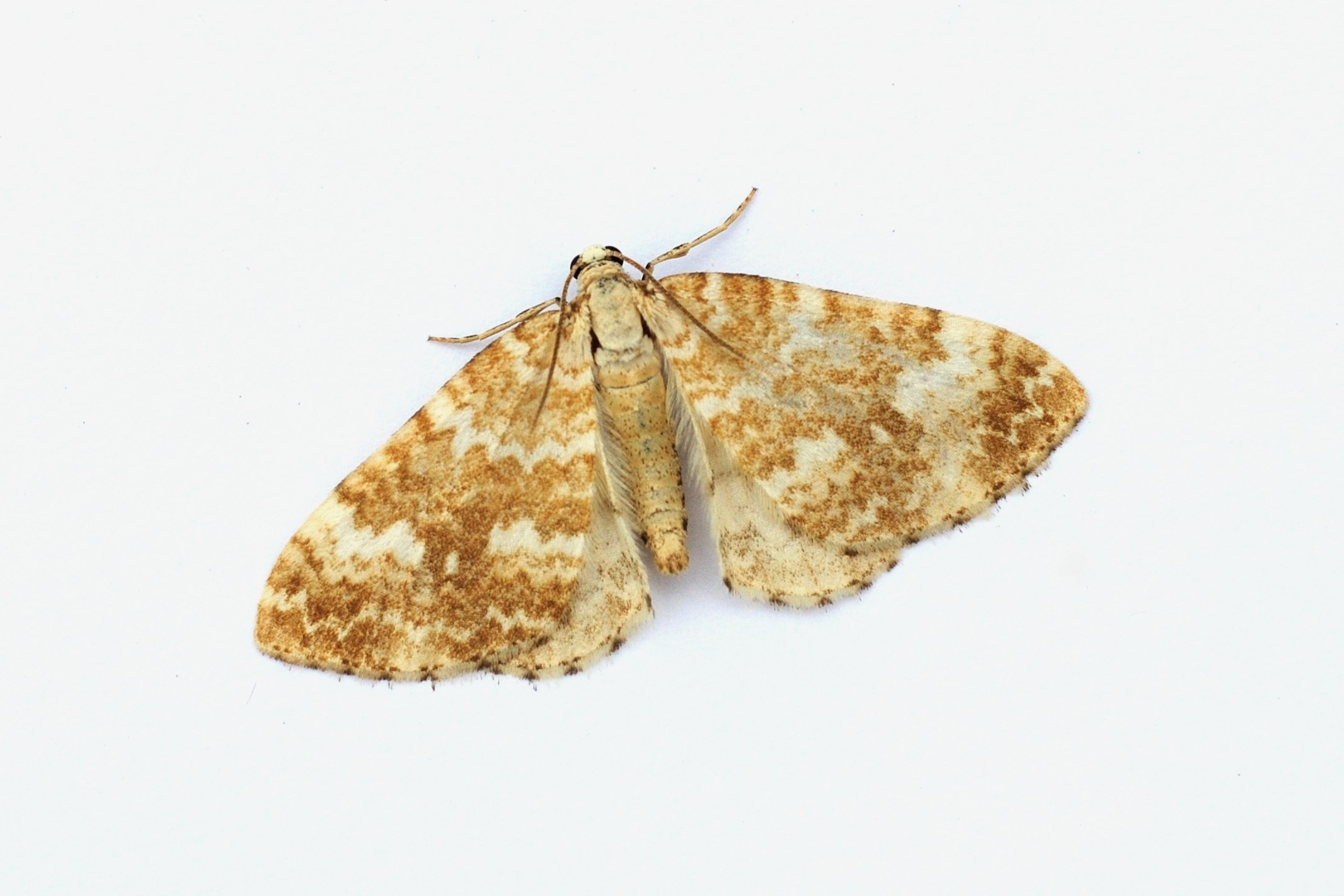
Now I know I said I was going to try to make these “Moths of the Week” seasonally appropriate ones, but since this week’s post is about foraging by the sea, I thought the Sandy Carpet was quite fitting! This is a really pretty little geometrid moth, although the sandy part of it’s name refers to the colour, rather than an association with beaches.
It is fairly common and well-distributed throughout southern Scotland, England, Wales, and parts of Ireland. According to ukmoths.org.uk it inhabits woodland, commons, chalky ground and other dry areas, so it’s quite surprising that it is sometimes very numerous in my often very wet garden! It is on the wing at dusk in June and July.
Posts here are always going to be free, but if you like what I write and/or find it useful, I’ve added a ko-fi button below if you want to show your appreciation. Thank you to everyone who has already contributed! xx
The film is available to watch on youtube, and you can read more about it here: https://hoaxes.org/archive/permalink/the_swiss_spaghetti_harvest
There is another British seaweed species, Chorda filum, also known as Fisherman’s Bootlace or Mermaid’s Tresses that could be confused with Sea Spaghetti, but it doesn’t grow from round buttons and the filaments aren’t flattened, instead being cylindrical and actually much more spaghetti-like.
Buckley, S., Hardy, K., Hallgren, F. et al. Human consumption of seaweed and freshwater aquatic plants in ancient Europe. Nat Commun 14, 6192 (2023). https://doi.org/10.1038/s41467-023-41671-2
Thanks for sharing this bit of island life, it was interesting to learn about the sea spaghetti and the sea slugs. ♥️
The sea life always fascinates me, anything in or under the water really. I'd love to experience a seaweed harvest someday, perhaps getting me a wee bit closer to my Scottish roots ♥