
Wild Garlic With Everything
- the fifth season

I’m sure you’re all aware of the four main seasons of spring, summer, autumn and winter. But did you know there is another season that fits into that time between late winter and early spring, when you’re not really sure what season it is? It is officially known as “Wild Garlic With Everything Season”, and while its beginning varies throughout the country, it started in my neck of the woods approximately four weeks ago. I love spotting the first green leaves poking up through the earth, then I wait impatiently for them to be big enough to pick. Later on, the white flowers are little stars shining out from shady woodland floors.
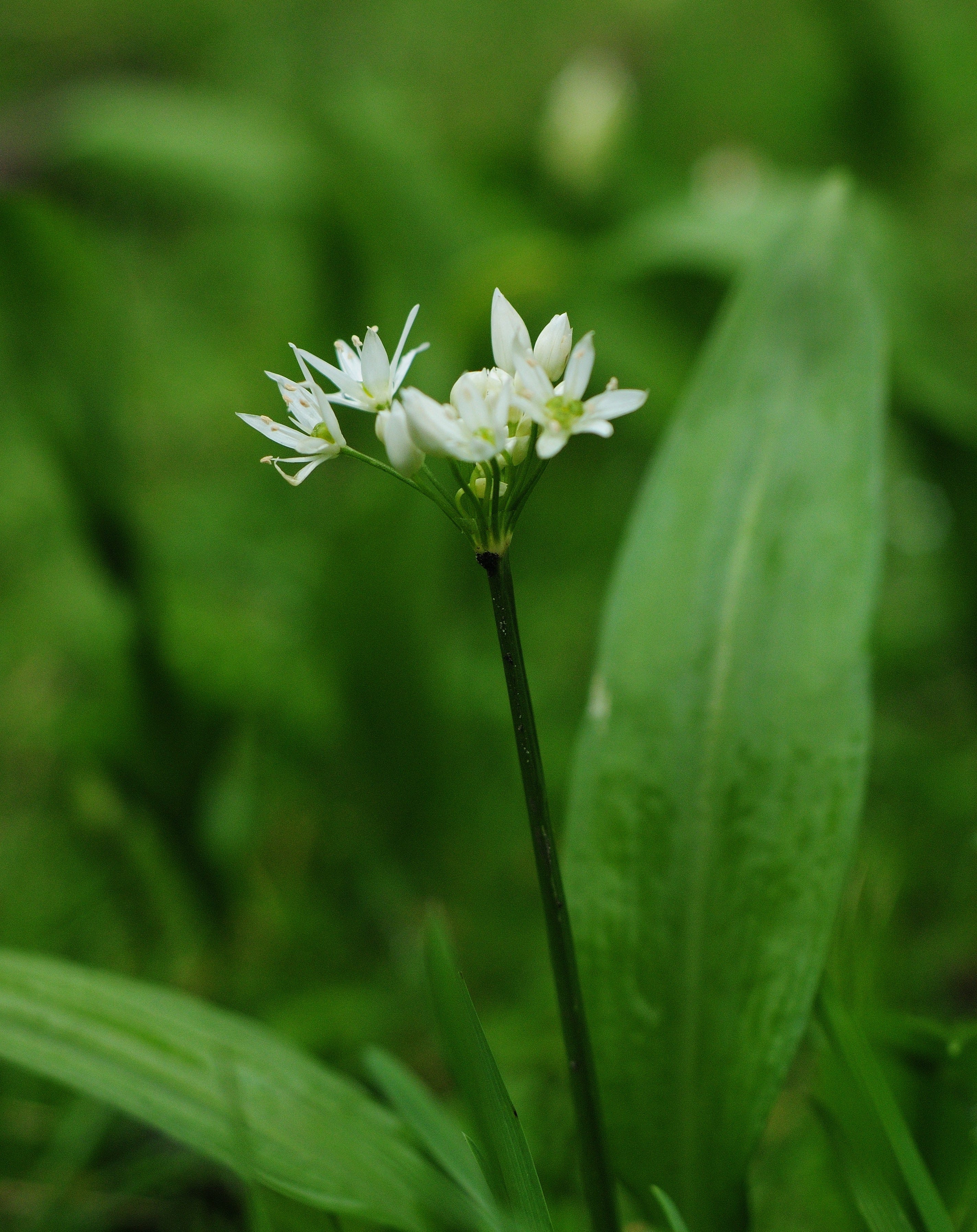
Wild Garlic (Allium ursinum) is what I would describe as a ‘gateway species’ into foraging: it’s easy to identify, easy to harvest, and easy to use. Please note, however, that none of my posts are meant to be used as definitive identification guides. I highly recommend getting yourself a good book or two (I think one with photos and one with drawings is best) and familiarising yourself with identification features and any potentially harmful lookalikes before picking and eating anything yourself. Ideally get a couple of books from a few years ago, before the rise in AI-generated misinformation. The internet seems to be awash with questionable foraging resources these days, which is one reason I prefer older books to modern websites and apps; I feel they are more trustworthy. That’s not to say there aren’t good resources online, you just have to be a bit careful.
Now, back to the garlic…
Wild Garlic is found in damp woodlands throughout most of the British Isles. The leaves are between 10 and 25 centimetres long and 4-7cm wide, with two or three growing from each bulb. There is a single flower stem, up to 50cm tall, with 6-20 flowers at the end of it. All parts of the plant are edible: flowers, seedpods, stems, leaves, and bulbs.1
It has several other common names, including Ramsons and Bear Garlic – hence the specific name ursinum from the Latin word for bear. This apparently comes from the brown bear’s fondness for the bulbs.
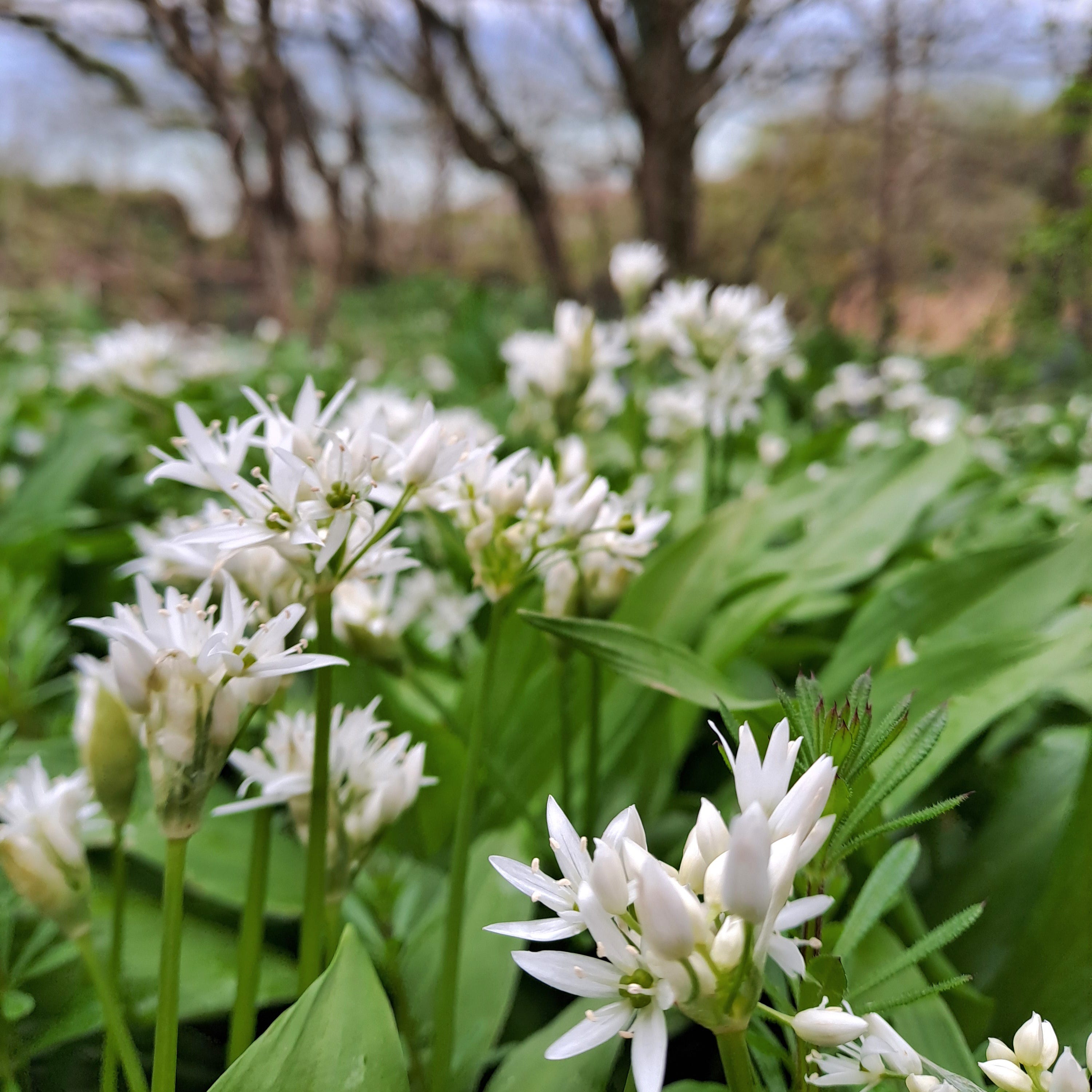
I know of a few good patches of Wild Garlic on the island, but my favourite one is in a wooded area at the back of my friends’ property. It’s situated on a hill that slopes down towards the sea, and I can hear birds chirping in the still-bare tree branches and the ferry coming and going as I pick away. It’s a wonderful place to escape from the madness of the world for a little while.
The plants carpet the ground thickly; I always start off trying to avoid standing on any, but there are so many they’re impossible to avoid! I soon give up and enjoy the scent of garlic from the crushed leaves beneath my feet. This is a big patch, and after my son and I have filled our bags, there’s no noticeable difference at all. I’ve relocated some bulbs from their garden to mine, in an attempt to establish a nice patch of it in my “orchard”. (I’ve put “orchard” in inverted commas because really it’s just a bit of my back garden with a couple of fruit trees and bushes in it!) They seem to be settling in well and the patch is gradually increasing in size each year.
Now, what to do with it all?!
There are so many ways to use Wild Garlic fresh, such as adding to scrambled eggs, omelette, or quiche; putting it on top of pizza; adding to risotto, soups and stews; in bread; in scone dough (along with some grated cheese)... Actually, you know what, just add it to any savoury dish and you’re unlikely to be disappointed! I made some lovely “Spring Soup” on the equinox last month, using Wild Garlic, Chickweed, Nettles and Sorrel that I had picked.
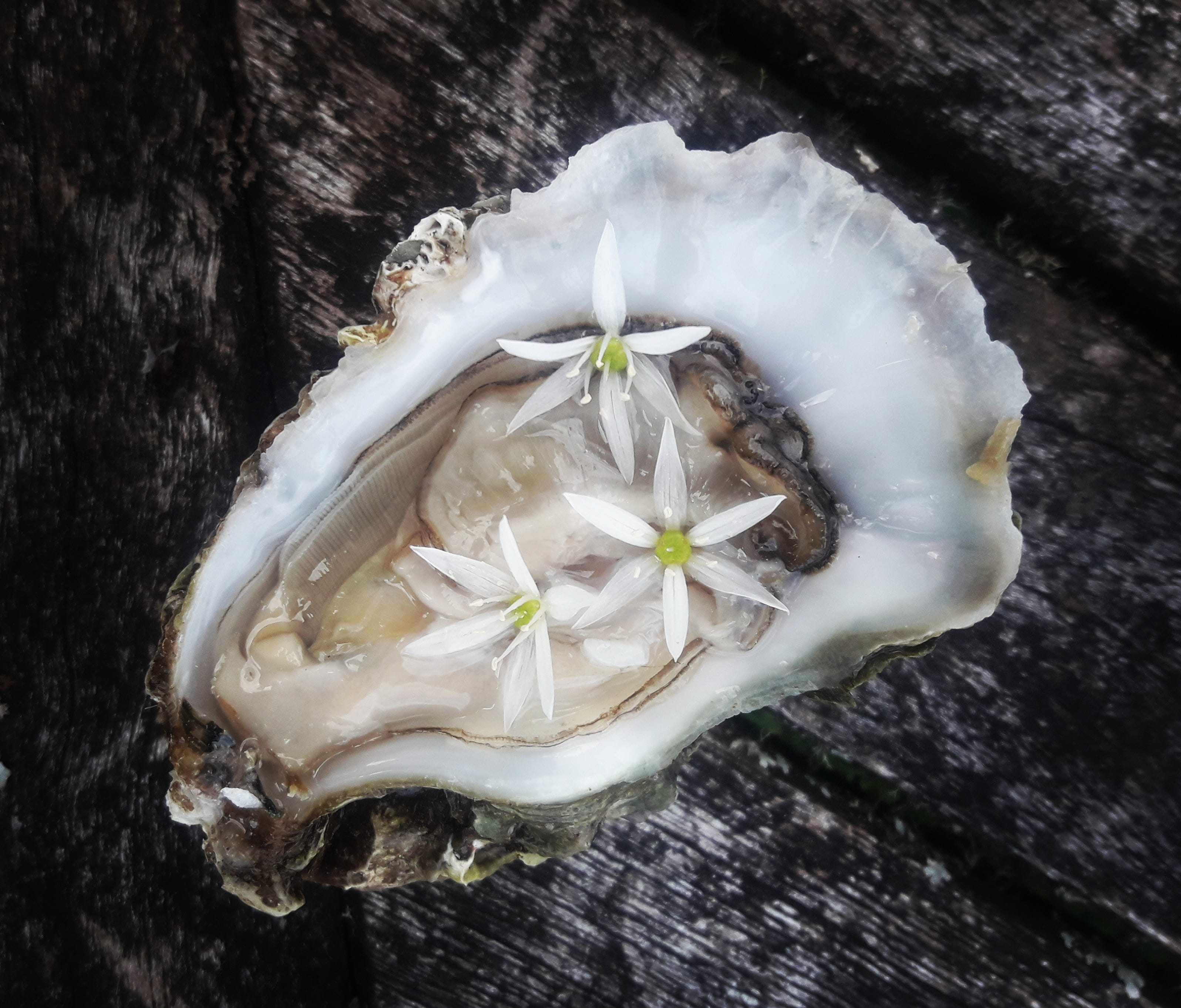
Raw oysters served with a generous squeeze of lemon juice and a sprinkling of Wild Garlic flowers are absolutely delicious.
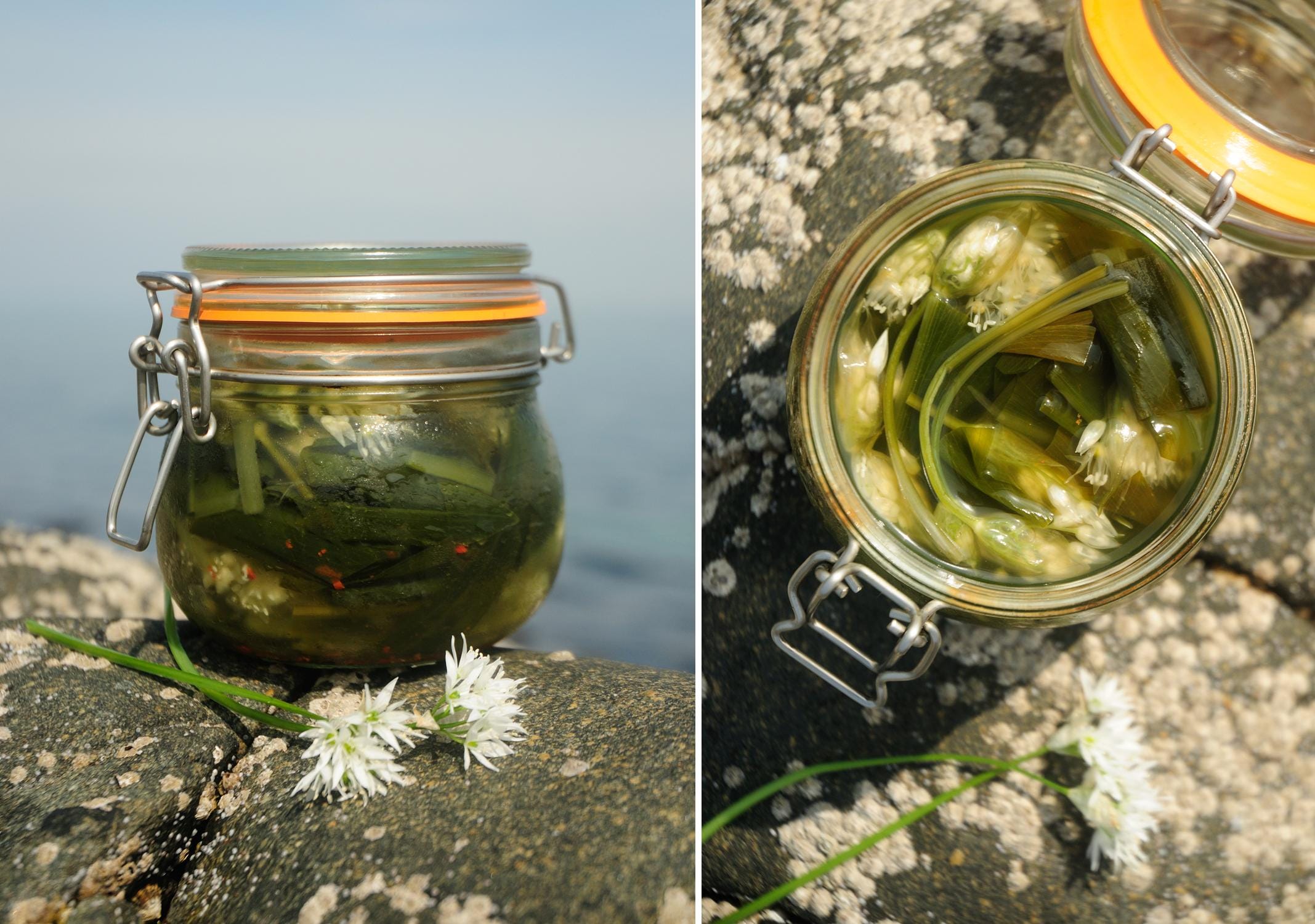
Every year I like to preserve some too so I can enjoy it later on, and I think the easiest way to do this is to pickle it. Pack a sterilised jar with chopped Wild Garlic, then make your pickling liquid by heating some apple cider vinegar with a bit of salt, sugar and chilli flakes. Pour the hot liquid over the garlic, and seal with a vinegar-proof lid. Leave for two weeks before eating. Refrigerate once opened.
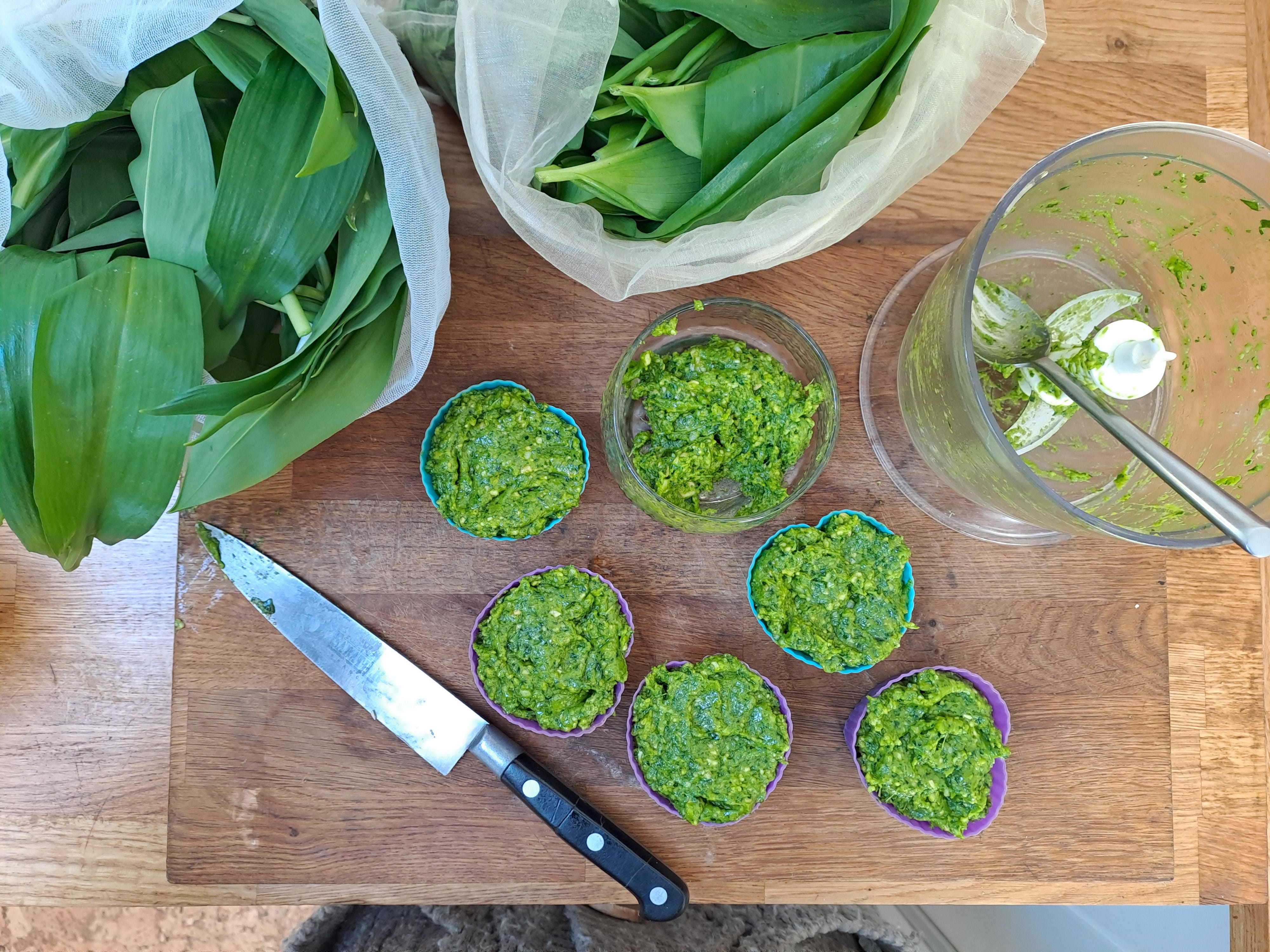
Pesto is another favourite. I know it’s traditionally made with pine nuts, but I use cashews because they are generally much cheaper. It’s also traditionally made using basil rather than Wild Garlic, so let’s not be too strict about things, okay? I have a couple of hazel trees in my garden and one of my goals is to be able to use their nuts in pesto. It’s a long-term goal since they are yet to actually produce any nuts at all!
I made half-a-dozen portions of pesto at the weekend and we had one for dinner with spaghetti, then I put the rest of them into the freezer for later use. I’ve since picked more Wild Garlic and made a second batch for the freezer, so we have plenty to last us over the next few months. Pesto-pasta is a quick and easy meal to produce after a long busy day in the garden when I don’t have much energy left for cooking up anything fancy.
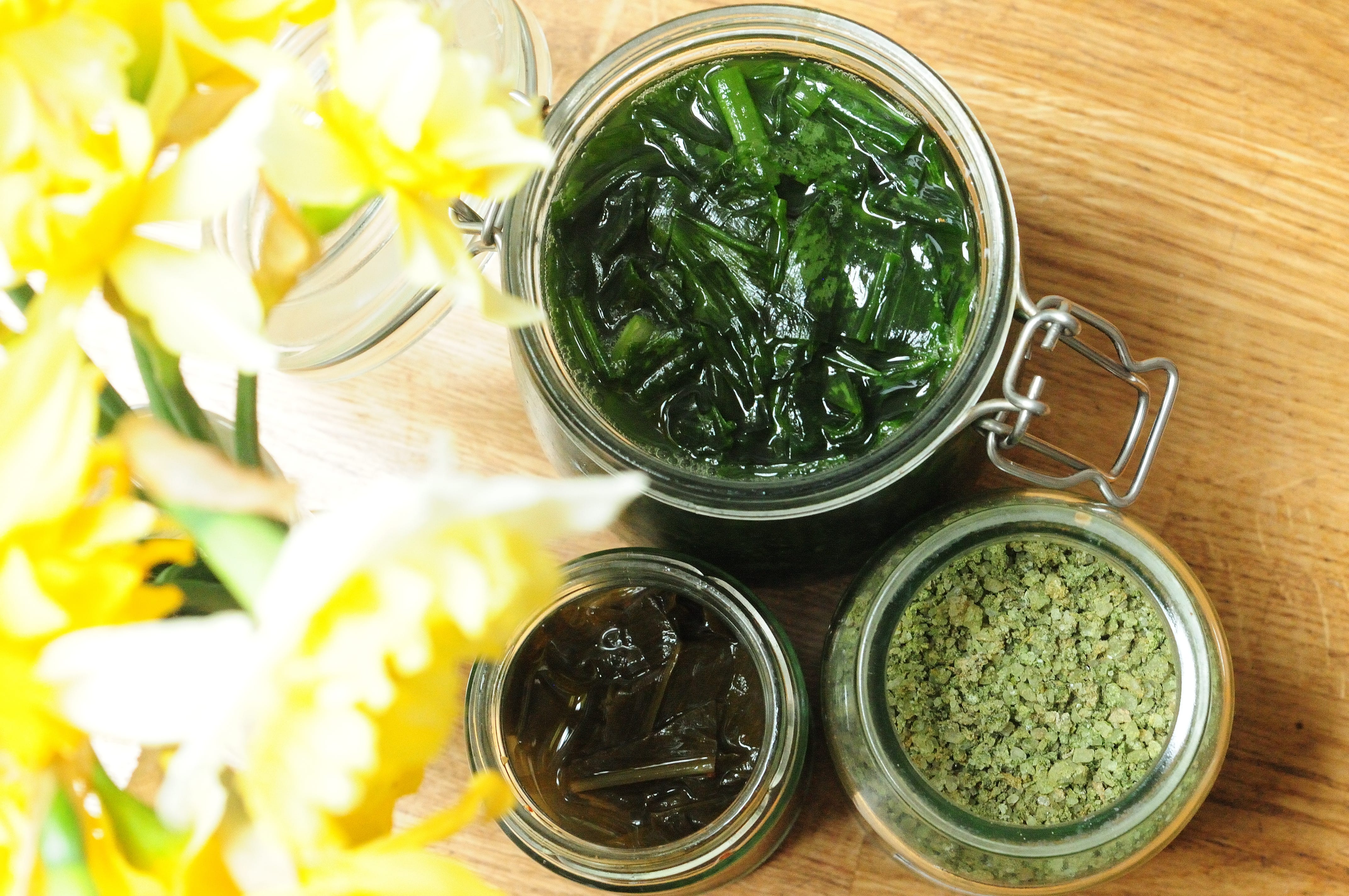
I’ve also fermented some Wild Garlic: I rubbed a tablespoonful of sea salt into half a kilogram of leaves, packed it into a jar along with all the liquid that had oozed out, and it’s sitting in the fridge at the moment. I’ll probably leave it another week or so before I start eating it. The instructions I followed last year said to leave the leaves whole but because they get chewy when they’re fermented, they were actually quite difficult to eat. I have learned from my mistake, and this year I chopped all the leaves up across the way, into 1-2cm wide pieces, before rubbing in the salt. This has made it much easier to eat and we’re getting through the jar quickly; I must make some more!
A couple of years ago I experimented with seawater-fermented Wild Garlic flowers, which I was definitely more keen on than other members of my family were. It’s something I’d like to try again though.
The final way I have preserved it so far this year is in salt, which is another really quick and easy thing to do. Just wuzz up your garlic leaves with half your sea salt until it’s well combined, then add the rest of the salt. Spread it out on a tray to dry - I put mine into the turned-off top oven while the main oven was on underneath cooking dinner, so it got heated gently to help dry it out.
There are still a few more weeks of “Wild Garlic With Everything Season” so I’m hoping to pick some more this weekend to use in meals throughout the next week, and if the flowers are ready, I’ll maybe give seawater-fermenting them another go. A friend gave me a new book yesterday - a belated birthday present - called “Wild Garlic Recipes: A Cookbook for Spring Foragers” by Eleanor Hayes so I now have many, many new recipes to try out!
What is your favourite way to eat Wild Garlic?
Thanks for reading, and have a good weekend x
Moth of the Week: V-Pug (Chloroclystis v-ata)
I couldn’t think of any garlic-themed moths for this week’s MOTW, but there is a fresh-spring-leaf-coloured one that can be on the wing at this time of year: the beautiful green V-Pug, which gets its name from the dark V-shaped marks on the forewings.
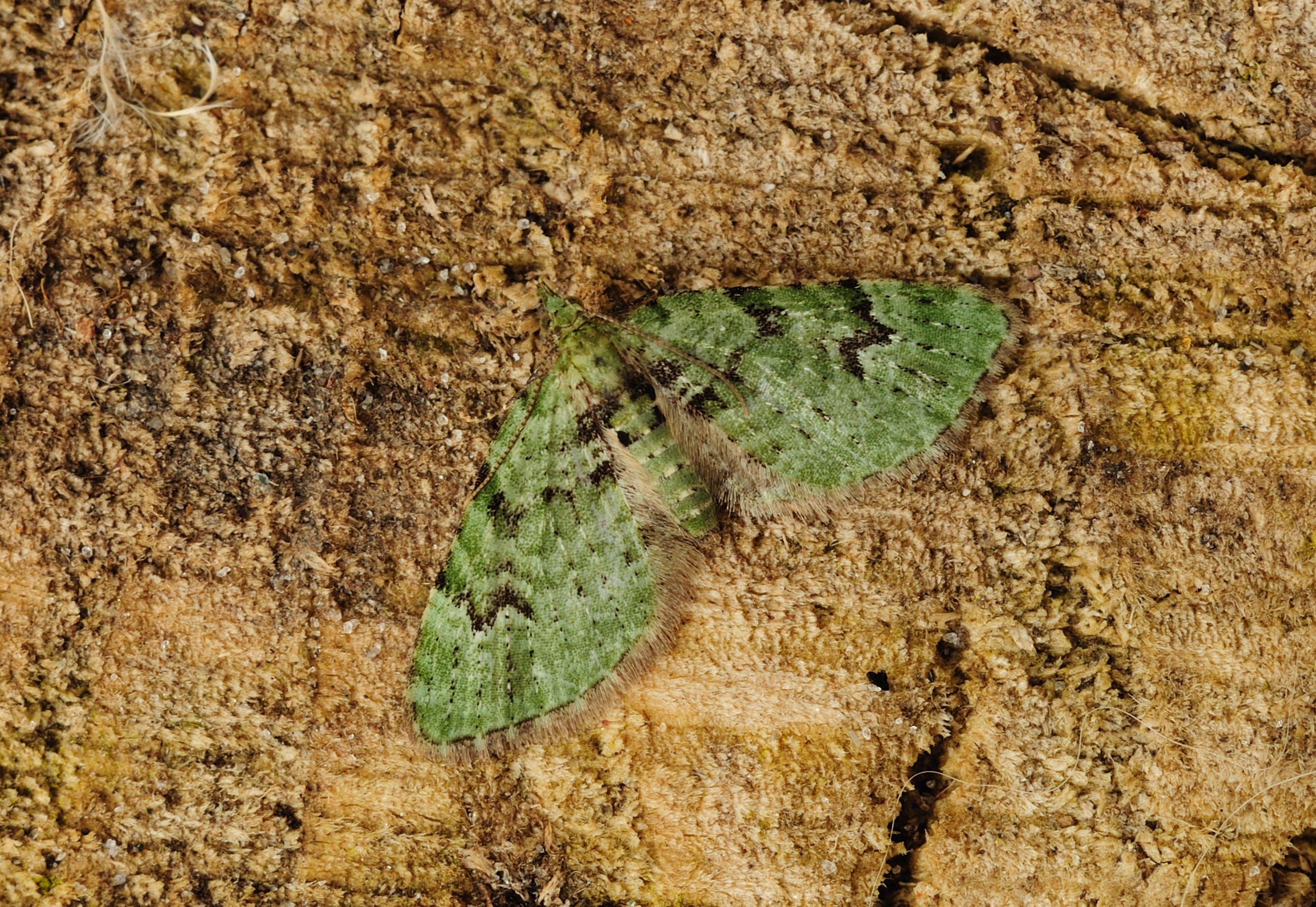
I’ve only seen this species once: a freshly-emerged individual in my porch on the 16th of April 2014. Looking through my various books, however, the flight season seems to be more late spring into summer - May to July - so it’s possible the warmth of my house caused this one to emerge earlier than usual.
The larvae feed on a range of flowers, including brambles, clematis, yarrow and elder.
Posts here are always going to be free, but if you like what I write and/or find it useful, I’ve added a ko-fi button below if you want to show your appreciation. Thank you to everyone who has already contributed! xx
In many places it is illegal to dig up the bulbs of wild plants without the landowner’s permission - check the rules where you live, or just harvest the leaves instead.
Several years ago we brought in some bulbs from the neighboring village, and 8 years later they are starting to take off, just a little bit. It seems that they prefer some soils over others. In Hungary, however, we were able to harvest kilos of leaves at a time, same as when we lived in Devon. Enjoy your bountiful harvest!!!
We have a patch of wild garlic which we started from 3 small plants and it's really getting established now, so we keep moving it so it will spread around the woodland. You can't have enough of it! We lived in Switzerland a few years and bärlauch season was a big thing, with special restaurant menus featuring it in every dish 😋 bärlauch pesto was very popular too. We often make a mixed herb salt but haven't tried the wild garlic version, so will give that a go.